
Look, let’s cut to the chase. Do any tinnitus supplements work? That’s the question that’s been ringing in my ears—quite literally—for the better part of two decades. It’s the silent scream at the end of a rock concert that never, ever ends.
For me, it’s a permanent, high-pitched E note, the kind a dog might hear right before a psychic explosion, and it’s been my constant, unwelcome companion since I mistakenly stood directly in front of a Marshall stack at a Sonic Youth show in ’99. My mistake? Thinking coolness was a viable substitute for earplugs.
I’ve become something of a reluctant connoisseur of the inner-ear symphony. I’ve spent a small fortune on pills, potions, and tinctures promising the one thing I crave more than a good hair day: silence. Pure, unadulterated, beautiful silence. And hey, I’m just a guy who writes about grooming and life for a living. I’m not a doctor. But I am a professional guinea pig. So pull up a chair, pour yourself a neat whiskey (it doesn’t help, by the way, but it makes you care less), and let’s get into the noisy, frustrating, and occasionally hopeful world of tinnitus supplements.
The Ringing in My Ears: A Personal History of Noise
My relationship with The Ring began not with a whimper, but with a feedback-laden bang. It was the summer of ’99, the air was thick with cigarette smoke and the promise of lo-fi rock, and my hearing was sacrificed at the altar of cool. The next morning, the world was muffled, like I was underwater, and cutting through the haze was that sound. Eeeeeeeeeeeeeee.
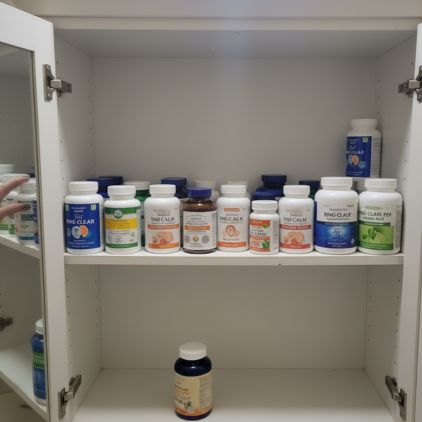
At first, I thought it would go away. It didn’t. I entered what I call the “Panic and Purchase” phase of my life. This is where you type “how to stop ringing in ears” into a search engine at 2 a.m. and fall down a rabbit hole of forum posts and miracle cures. My medicine cabinet started to look like a GNC outlet store after a hurricane. Ginkgo biloba? Bought it. Mega-doses of Zinc? Swallowed it. Magnesium citrate? You bet. I was a man possessed, chasing a quiet that felt perpetually out of reach.
The truth is, most of this stuff did precisely nothing. The ginkgo made me feel a little more alert, but the ringing remained, a steadfast critic of my life choices. The zinc just made me nauseous. It was a frustrating, expensive game of whack-a-mole with a symptom whose cause was a mystery even to me.
So, What’s Actually Going On In There? An Expert Weighs In
After years of self-experimentation, I decided I needed a professional opinion. I needed to understand the why before I could ever hope to find the how. So I booked an appointment with Dr. Alisha Chen, a leading audiologist and tinnitus specialist at the Cornell Hearing Institute.
I laid out my supplement graveyard on her desk. She gave a kind, knowing smile—the kind I imagine a mechanic gives someone who’s tried to fix their transmission with WD-40 and hope.
“Bob,” she started, her voice calm and measured, a stark contrast to the cacophony in my head. “The first thing to understand is that tinnitus isn’t a disease itself; it’s a symptom. It’s your brain’s response to damage in the auditory system. The hair cells in your cochlea are like little piano keys. When they’re damaged—by loud noise, age, certain medications—they stop sending signals to your brain. So your brain, confused by the lack of input, essentially ‘turns up the gain’ and creates its own noise to fill the silence. It’s a phantom sound.”
Well, that was a revelation. I wasn’t trying to fix my ears; I was trying to calm my brain.
“Now, to your question,” she continued, gesturing to my pile of bottles. “Do any tinnitus supplements work in a direct, curative way? The scientific evidence is, frankly, weak. Large-scale studies on things like ginkgo biloba have shown it to be no more effective than a placebo for most types of tinnitus. Zinc might show some promise for individuals with a documented zinc deficiency, but for the average person, it’s unlikely to make a dent. Magnesium is interesting—it’s thought to have a protective effect on the hair cells and can sometimes help with what we call ‘hidden hearing loss,’ but it’s not a silver bullet.”
It was sobering, but it made sense. I was throwing darts in the dark, hoping to hit a target I couldn’t even see.
The “Secret Weapon” I Stumbled Upon By Accident
So, I was ready to give up. I’d made peace with my personal soundscape. Then, about a year ago, I discovered my secret weapon entirely by accident. And it wasn’t in a vitamin shop.
I was on a brutal deadline, traveling across three time zones in a week, and my sleep was utterly wrecked. A friend, seeing the zombie-like state I was in, handed me a bottle of a relatively new sleep supplement. “This’ll knock you out without the groggy hangover,” he promised. Desperate, I took two that night.
I woke up eight hours later, feeling more rested than I had in years. And as I lay there in that blissful, pre-coffee haze, I noticed something. Something profound.
The ringing was… quieter.
Not gone. Let’s not get crazy. But it was dialed down from a deafening scream to a manageable hum. It was like someone had finally turned the volume knob from an 11 to a 4. I could hear the hum of the air conditioner, the distant traffic, the birds outside my window. For the first time in memory, my tinnitus wasn’t the loudest thing in the room.
The supplement? It was a blend focused on enhancing GABA, a calming neurotransmitter, and it contained a hefty dose of a specific form of Magnesium—Magnesium L-Threonate—along with L-Theanine, Apigenin, and a few other botanicals.
I was elated. Had I finally found the answer? I used it every night for two weeks, and the effect held. The reduction in perceived volume was consistent. I wasn’t “cured,” but I was functional. I was… happy.
The Expert Debrief: Why My “Weapon” Wasn’t a Magic Bullet
Armed with this newfound hope, I went back to Dr. Chen. I excitedly explained my breakthrough, expecting her to be amazed.
She listened patiently, then gave me that smile again. “I’m not surprised you found some relief, Bob. But you’re probably crediting the wrong mechanism.”
She broke it down for me. “What you’re likely experiencing isn’t the supplement directly ‘fixing’ your tinnitus. Magnesium L-Threonate is unique because it has a high bioavailability for crossing the blood-brain barrier. It’s excellent for calming neural excitability. L-Theanine and Apigenin are also renowned for reducing anxiety and promoting relaxation.”
“The thing about tinnitus,” she explained, “is that its perceived volume is inextricably linked to your stress and anxiety levels. It’s a vicious cycle: the tinnitus causes stress, and the stress amplifies the tinnitus. You’ve essentially found a powerful cocktail that breaks the cycle by chemically forcing your nervous system to chill out. You’re not stopping the sound; you’re stopping your brain’s reaction to the sound. You’ve lowered the gain.”
It was a brilliant, if slightly ego-deflating, explanation. My secret weapon wasn’t attacking the root cause; it was a brilliant negotiator calming my frantic brain.
She then pivoted to what she considers a more cutting-edge approach. “While what you’re doing is helpful, the research is now pointing towards targeted neurosupplementation. A combination of specific B vitamins—particularly B12, B6, and Folate—along with Alpha Lipoic Acid and N-Acetyl Cysteine (NAC) is showing promise in clinical trials. These compounds work on reducing neural inflammation and supporting the health of the mitochondria within the nerve cells, which is where the real dysfunction might be occurring. It’s a more direct approach to supporting the entire auditory neural pathway, not just managing the stress response.”
Practical Takeaways: Your Action Plan for Managing the Ring
So, after all that—after the years, the money, the hope, and the expert consultations—what’s the real, actionable advice? Here’s what I’ve learned.
-
See a Professional First. I can’t stress this enough. Tinnitus can be a symptom of other issues, from impacted earwax to blood pressure problems. Rule out the serious stuff. Get a hearing test. Know what you’re dealing with.
-
Manage Your Stress Relentlessly. This is the single biggest factor in my day-to-day management. If a supplement helps you do that, great. But it could also be meditation, exercise, therapy, or yoga. Break the stress-tinnitus loop by any means necessary.
-
Consider a Targeted Supplement Stack. Based on Dr. Chen’s advice, I’ve switched from my sleep-aid cocktail to a more targeted morning stack. I now take a high-quality Methylated B-Complex, 600mg of Alpha Lipoic Acid, and 600mg of NAC. The effect has been more stable and profound than anything else I’ve tried. It feels like I’m supporting the system, not just masking the problem.
-
Protect What You Have Left. Wear earplugs to concerts (the high-fidelity ones are fantastic—you hear the music clearly, just at a safer volume). Turn down the headphones. Give your ears a break. This is non-negotiable.
-
Mask the Sound. I have a white noise machine in my office and use a fan at night. It provides a neutral sound for my brain to latch onto instead of the ring. It’s not a cure, but it’s a fantastic tool.
Conclusion: A Quieter, If Not Silent, Peace
So, to loop back to the million-dollar question that started this whole journey: do any tinnitus supplements work?
The answer is complicated. Do they work like an antibiotic, eradicating the problem at its source? No. Absolutely not. The supplement industry is riddled with overblown promises preying on desperation.
But can certain compounds, backed by emerging science and taken with a strategic purpose, help you manage the condition and significantly reduce its impact on your life? One hundred percent, yes. The key is to shift your mindset from “cure” to “management.” It’s about building a toolkit—of supplements, habits, and professional guidance—that gives you back a sense of control.
My E note is still there. I can hear it right now as I type this. But it’s background music now, not the main event. I’ve made peace with the ghost in my machine. And after twenty years of ringing, that peace, however relative, feels like a miracle.
Stay sharp, gentlemen.
Beauty Bob