
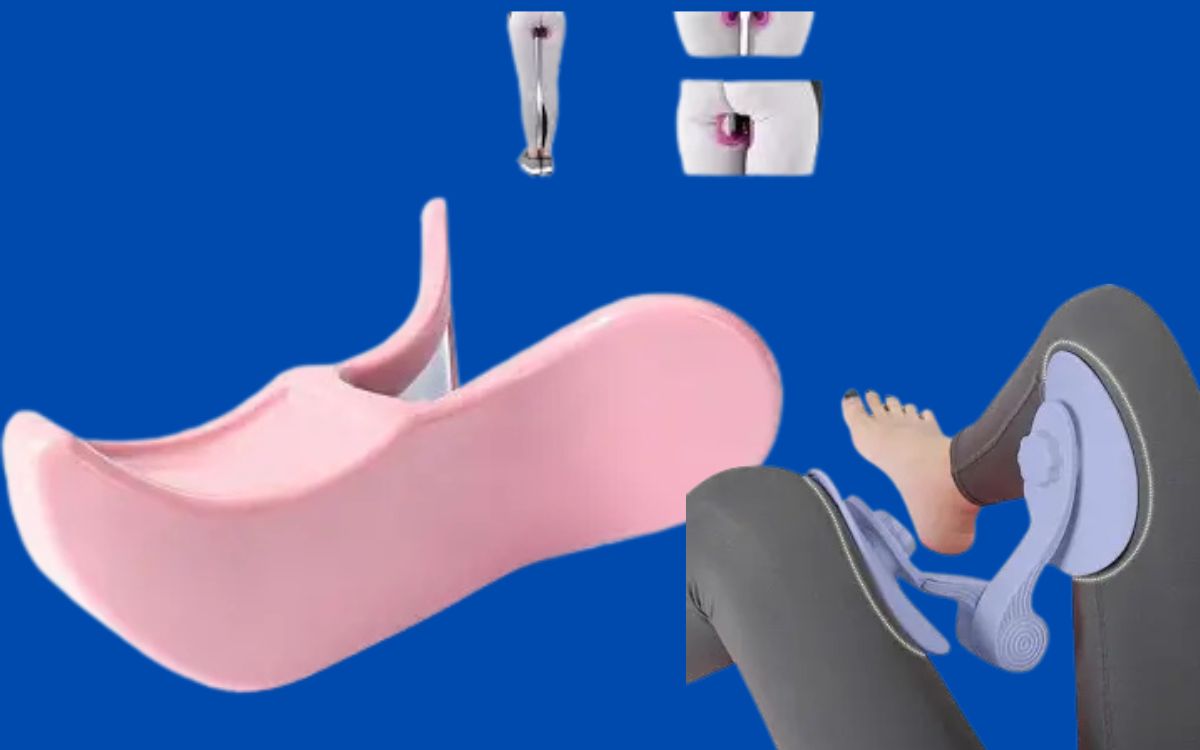
Does the Pelvic Floor Exerciser Really Work?
Pulling back the curtain on the hammock of your health.
You’ve seen the ads. A smiling, confident woman leaping on a trampoline without a care in the world. You’ve heard the whispers from friends, or maybe you’ve had that moment yourself—a sneeze, a laugh, a jump—that made you cross your fingers and hope for the best.
I’m not a robot spitting out a clinical study. I’m a person who’s been there, done the research, and talked to the experts. Let’s ditch the jargon and have a real chat.
The Living, Breathing Hammock
Think of your pelvic floor not as some mysterious medical term, but as a living, breathing hammock. A beautiful, intricate sling of muscles and tissues that cradles your bladder, bowels, and uterus. It’s what gives you control.
So, let’s dive in.
The Whisper Network:
What’s Really Going On Down There?
There’s a secret sisterhood navigating leaks, pressure, and a nagging feeling that something’s… off. You’re not alone. Not even close.
That little leak when you cough too hard. They call it stress incontinence; we call it a nuisance.
The sudden, “I-have-to-go-RIGHT-NOW” urge that comes out of nowhere.
A feeling of fullness or heaviness—a clear signal from your body to check in with a doctor.
“Your body isn’t failing you.
It’s asking for help.“
For decades, the advice was simple: “Just do your Kegels.” But what if you’ve been doing them wrong? What if you can’t even find the muscles to clench?
This is the “Kegel Gap” that pelvic floor exercisers promise to fill.
So, How Do You Strengthen a Muscle You Can’t See?
Imagine you’re building a bicep. You’d grab a dumbbell and do curls. You’d feel the burn and see the muscle contract. Your pelvic floor is no different. It’s a muscle group that needs resistance and targeted, consistent exercise.
The Kicker: You can’t watch it work in a mirror. Are you clenching your glutes? Holding your breath? Pushing instead of lifting? A device acts as your personal trainer, turning an abstract effort into a measurable workout.
So, How Do You Strengthen a Muscle You Can’t See?
Let’s get back to basics. Imagine you’re trying to build a bicep. You’d grab a dumbbell, right? You’d do curls. You’d feel the burn, see the muscle contract, and over time, you’d need a heavier weight to keep making progress.
Your pelvic floor is no different. It’s a muscle group. To get stronger, it needs resistance. It needs targeted, consistent exercise.
But here’s the kicker: you can’t watch it work in a mirror. It’s incredibly difficult to know if you’re even activating the right muscles. Are you clenching your glutes? Holding your breath? Pushing down instead of lifting up? Studies show that a shocking number of women perform Kegel exercises incorrectly, which is at best useless and at worst, counterproductive.
This is the core argument for pelvic floor muscle strengthening exercises with a device. A good exerciser acts as your personal trainer for this hidden muscle group. It provides biofeedback—it shows you, through an app or a simple signal, that you’re contracting the right muscles and doing it effectively. It turns an abstract, internal effort into a tangible, measurable workout.
Your Guide to the Pelvic Floor Universe
The market is flooded with options, and it can feel overwhelming. They range from simple weighted ben-wa balls to high-tech smart devices that sync with your phone. Let’s break down the main types so you can see what might fit your life (and your budget).
Smart Kegel Trainers (e.g., Elvie, Perifit)
How It Works & The Vibe: The Techie Best Friend. You insert the device, and it connects to a fun, game-filled app on your phone. The app gives you real-time feedback, guiding your clenches and making it feel like a game, not a chore.
The Good: Brilliant biofeedback. You know you’re doing it right. The gamification is incredibly motivating. Tracks your progress over time.
The Not-So-Good: The price tag. These are a significant investment. Requires commitment to the app and tech.
Weighted Vaginal Balls (aka Kegel Balls)
How It Works & The Vibe: The Old-School Gym Rat. Simple, no-frills tools. You insert one or two weighted balls and simply clench to keep them from falling out. It’s a physical, tactile experience.
The Good: Affordable and straightforward. No apps, no charging. The physical sensation of “holding on” is a clear indicator of engagement.
The Not-So-Good: No guidance on form. If you’re using the wrong muscles, you’ll never know. Can be awkward to remove.
Resistance Trainers (e.g., Intensity)
How It Works & The Vibe: The Progressive Overload Pro. These often come with different levels of resistance, like a set of dumbbells for your pelvic floor. You start with light resistance and work your way up as you get stronger.
The Good: Directly mimics strength training principles. Clear progression path. Often more affordable than smart devices.
The Not-So-Good: Still lacks the guided feedback of smart tech. Relies on you knowing the correct form from the start.
See? It’s not one-size-fits-all. Your personality, your learning style, and your budget all play a role in which tool will feel like a helpful companion, not a forgotten drawer-dweller.
The Million-Dollar Question:
Does The Pelvic Floor Exerciser Really Work?
Okay. Deep breath. The moment of truth. The answer is a resounding: Yes, but with critical, non-negotiable caveats.
Think of it as the world’s most sophisticated dumbbell. A dumbbell doesn’t build muscle—you build muscle by consistently and correctly using it.
The “Yes” Part: Why It Works
They eliminate the guesswork. For anyone who has ever wondered, “Am I even doing this right?”, these devices provide a clear, gold-standard answer.
Invisible clenches are boring. App-based trainers turn a chore into an engaging 5-minute habit. Consistency is the magic ingredient.
As your muscles get stronger, these devices ensure you continue to see improvements instead of hitting a plateau.
The “But” Part (Crucial):
⚠️ Not a Magic Cure-All: If dysfunction is severe or related to significant prolapse, a device alone is not enough. You need a pelvic floor physiotherapist.
⚠️ Form Matters: If you clench your abs or hold your breath, you’re just reinforcing bad habits. You must follow instructions meticulously.
⚠️ Strength ≠ Coordination: A tight floor might not need clenching; it might need relaxation. Focusing only on clenching could, in some cases, make things worse.
Beyond the Device: Your Support System
Using a gadget is a fantastic step, but your pelvic health is woven into your entire life. Here is how to integrate strength into your daily rhythm:
1. The Knack
This is a brilliant maneuver. Just before you sneeze, cough, or lift, quickly squeeze and lift your pelvic floor. It’s like bracing for impact—a game-changer for preventing leaks.
2. Belly Breathing
Lie on your back, knees bent. Breathe into your belly. As you exhale, imagine your pelvic floor lifting like an elevator. This connects your breath to your strength.
3. Smart Movement
Pay attention to how you move. When you lift, engage your core and exhale on the effort. Never hold your breath and bear down.
The Human Verdict
“The real proof isn’t a graph on an app. It’s the day you realize you laughed at a movie—a real, belly-deep laugh—without a second thought.”
It’s the quiet confidence that comes from taking control of a part of your health you thought was lost. Not just fewer leaks, but more life.
Your Action Plan: How to Get Started
Feeling inspired? Good! Here’s a simple, no-pressure path forward.
Listen to Your Body. First and foremost, if you have any pain, significant prolapse symptoms, or are just unsure, please see your doctor or a pelvic health physiotherapist. They can give you a proper diagnosis and a personalized plan. This is the most important step.
Define Your “Why.” Why do you want to do this? Is it to jump with your kids on the trampoline? To go for a run? To just feel more secure? Your “why” is your fuel.
Do a Self-Check. Try to find those muscles. Next time you urinate, try to slow or stop the flow mid-stream. Feel that sensation? Those are your pelvic floor muscles contracting. Important: Don’t do this regularly, as it can disrupt bladder function. It’s just a one-time identification test.
Choose Your Tool. Look at the table above and be honest with yourself. Will you actually use a high-tech app? Or will a simpler set of weights be less intimidating? There’s no wrong answer, only the right one for you.
Start Small. Whether you’re using a device or just practicing on your own, begin with just 5 minutes a day. Consistency trumps duration every single time. Make it a habit, like brushing your teeth.
Be Patient and Kind. These muscles didn’t get weak overnight, and they won’t get strong overnight either. You might not feel a difference for a few weeks. That’s normal. Celebrate the small wins.
Empowerment Over Quick Fixes
Does the pelvic floor exerciser really work?
Yes. It is a profoundly effective tool for demystifying your body and building tangible strength. But it’s not a silver bullet. The real magic isn’t in the device itself—it’s in the decision to finally pay attention to that silent, supportive hammock within you.
Your pelvic floor has been holding you up your whole life. Maybe it’s time to return the favor.