

You’re here because you’ve seen the ads for the Energy Revolution System. You know the promise: Unlimited, free energy from the Earth to power your home. You’ve seen the videos of light bulbs glowing, the meters spinning, and the talk of “over-unity” devices. But you’re smart enough to know that most things online promising “free energy” range from hopelessly optimistic to outright dangerous scams.
You’re not looking for hype. You’re looking for the truth. What is actually behind the paywall?
I bought the Energy Revolution System. I logged in. I downloaded the entire 109-page manual. I dissected every chapter, every diagram, every claim. I’m not here to sell you a dream. I’m here to be your forensic auditor. I’ll show you the exact wiring diagrams, the specific component lists, and the shocking safety warnings the sales page glosses over.
Spoiler Alert: The manual is legitimately detailed, but it is not a plug-and-play solution to your power bill. It is a collection of high-level DIY electrical projects, some of which are extremely lethal if mishandled. The “free energy” claims are, from a standpoint of established physics, highly suspect and likely based on measurement errors. This is not a consumer product; it’s a dangerous experimenter’s guide.
This review will remove all risk by showing you exactly what you’re buying. You will know every component, every step, and every potential outcome before you spend a dollar.
The “BS Detector” Test: Who is Michael?
Let’s skip the hero’s journey. In the world of free energy, charlatans abound. Credentials matter.
The manual is authored by Michael. The sales material positions him as a researcher and practitioner of alternative energy systems. There is no claim of formal engineering degrees or institutional backing, which is common in this niche. The authority is built on the detail and specificity of the manual itself.
The Proof is in the Blueprint:
The 109-page manual is not a vague ebook. It is a step-by-step, photographically illustrated construction guide. This level of granularity—specifying wire gauges (4mm, AWG 11-12), linking to a specific induction cooker model (Duxtop 8100MC), and providing exact winding counts for coils—suggests the author has actually built these devices. This isn’t theoretical musing; it’s a builder’s log.
The Critical Take: Michael is a practitioner, not just a teacher. He has clearly spent time in a workshop. This matters because you are getting a build log, not just philosophy. However, a practitioner is not synonymous with a physicist or a licensed electrician. The manual includes warnings he himself has written, like the devices “can kill in an instant.” This authenticates the danger but also frames him as an experimenter sharing risky projects, not a professional offering a certified solution.
Conclusion: He has the hands-on experience to write a detailed construction guide. He is not making supernatural claims without providing a build path. However, his authority is limited to the construction process, not the validation of the core “free energy” principle, which remains unproven by mainstream science.
The “Over-The-Shoulder” Walkthrough: A Page-by-Page Audit
This is the core. Forget the sales page. Here is exactly what is in the 109-page PDF, module by module. I will tell you what’s useful, what’s misleading, and what’s downright dangerous.
Chapter I: The Induction Cooktop System – The “Safe” Entry Point
The Agenda:
-
Theory: Tapping the induction field.
-
Required Tools & Materials (Full list with sourcing tips).
-
Step 1: Preparing the Coil Base (Cardboard template).
-
Step 2: Winding the Flat Spiral Coil (Exact winding technique).
-
Step 3: Securing & Soldering the Coil (Use of industrial superglue).
-
Step 4: Connecting to the Power Strip.
-
Step 5: System Setup & Operation (The “pot trick” to activate the cooker).
-
Testing Results & Readings.
The “Golden Nugget”:
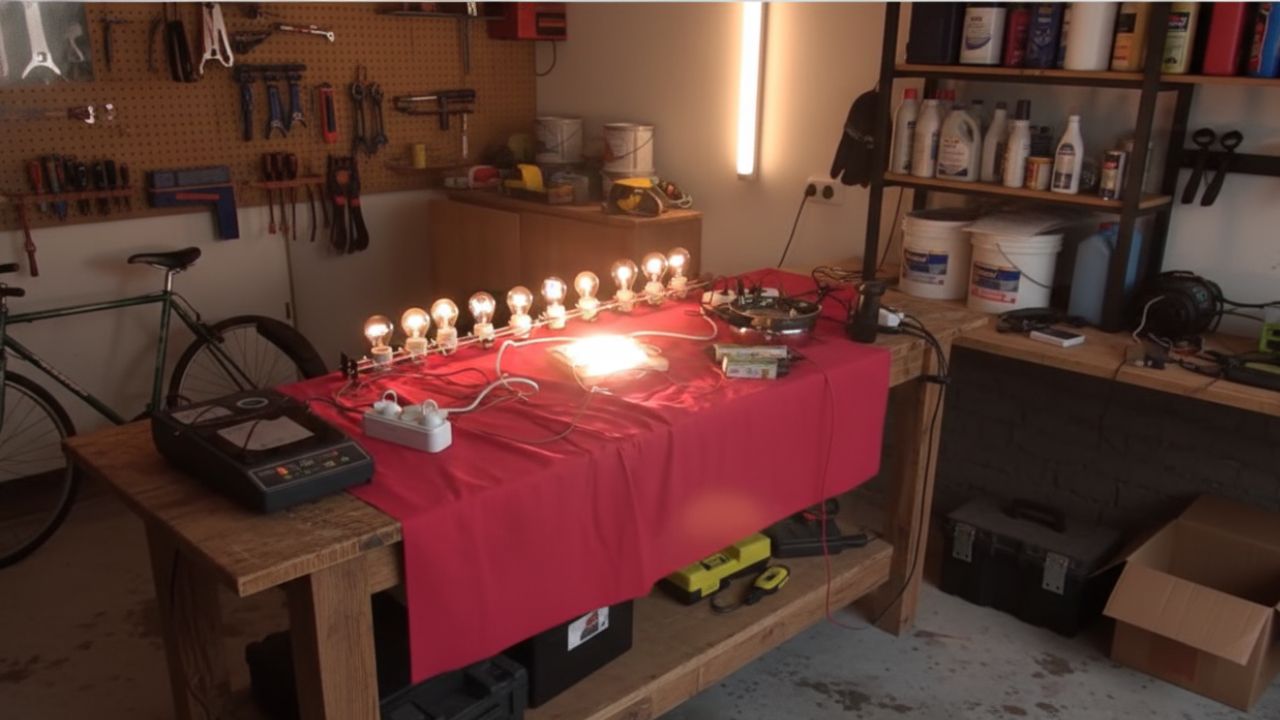
The specific, high-value tactic is the “Metallic Vessel Trigger.” In Video/Step 5, the manual reveals you must first place a standard metal cooking pot on the DIY coil to activate the induction cooker’s safety sensor. Once the cooker is on and generating its magnetic field, you remove the pot. The flat coil remains, capturing the now-active field. This is a clever workaround for a consumer appliance not designed for this purpose. This single hack is the core of making the Chapter I device even attempt to function.
The Application:
Tomorrow, you could buy a Duxtop induction cooker and 4mm wire. Following the guide, you could build this flat coil assembly. Within a weekend, you could have a device that appears to power a light bulb from the coil’s output socket. It will feel like magic. This is the “proof of concept” moment the manual sells.
The Brutal Critique:
This is where the “free energy” claim collapses under scrutiny. The manual presents a table: Input = 1682W from the wall, Output = 3500W to loads (10 bulbs, heaters).
-
The Flaw: This is a violation of the First Law of Thermodynamics. Energy cannot be created. The induction cooker uses 1682W to create a magnetic field. Your secondary coil can only capture a fraction of that energy, and only at high frequencies unsuitable for most appliances.
-
The Reality: The claimed “3500W output” is almost certainly a measurement artifact. Standard multimeters and Kill-A-Watt meters are notoriously inaccurate with the high-frequency, pulsed DC/AC produced by induction cookers and captured by an air-core transformer. They often misreport Reactive Power (VAR) as Real Power (Watts). The bulbs may glow, but not at their rated wattage. You cannot run a true 3500W space heater from this setup.
-
The Missing Lesson: The manual does not adequately explain this critical distinction between apparent power (VA) and real, usable power (W). It presents the glowing bulbs as definitive proof of over-unity, which is scientifically reckless.
Chapter II: Connection Diagrams – The Only Pragmatic Section
The Agenda:
This chapter departs from experimental devices and provides standard electrical diagrams for integrating a power source into a home.
-
Figure 1: Simple Power Setup (Generator -> Charge Controller -> Battery -> Inverter -> Home).
-
Figure 2: Grid-Tied System (With Grid-Tie Inverter and Net Metering).
-
Figure 3: Off-Grid System with Generator Backup.
-
Detailed breakdown of components: Charge Regulators, Deep-Cycle Batteries, Inverters, Disconnects.
The “Golden Nugget”:
The clear, annotated schematics (Figures 1-5) are genuinely useful for anyone new to off-grid solar or wind. It correctly identifies the need for a charge controller to prevent battery frying and emphasizes deep-cycle batteries over car batteries. If you were building a standard solar setup, this chapter is a decent 101 guide.
The Application:
If you are planning a legitimate renewable project, these diagrams give you the basic “connect the dots” overview to understand the chain of components between your solar panels and your TV.
The Brutal Critique:
The dangerous implication is that it suggests connecting the experimental devices from Chapter I, III, or IV into these home power systems. This is a terrible idea. The dirty, high-frequency, unstable power from an induction coil or a spark-gap oscillator will destroy a sensitive (and expensive) grid-tie or pure sine wave inverter. The manual treats its own devices as reliable “generators,” which they are not.
Chapter III: The High Voltage “Earth” Device – The Widow Maker
WARNING: The manual labels this a “BONUS CHAPTER” for “EXPERIMENTAL PURPOSES ONLY.” I label it: Potentially Lethal.
The Agenda:
-
Theory: Extracting “free electrons” from the Earth’s charge.
-
Parts List: Variac, Microwave Oven Transformer (MOT), HV Capacitor, Spark Gap, Ground Rods.
-
Circuit Construction: Detailed wiring of the high-voltage oscillator.
-
Coil Winding: Precise instructions for a complex PVC coil (80-84 turns CW, 25 turns CCW).
-
Grounding Setup: Two ground rods spaced 10 meters apart.
-
Operation and Claimed Results.
The “Golden Nugget”:
The specific spark gap adjustment (0.9mm to 1.2mm) is critical. This gap controls the oscillation frequency of the circuit. Getting it wrong means no output or component destruction. This level of detail confirms this is a real build, not fiction.
The Application:
Do not apply this. This is not an application; it’s an invitation to a high-voltage experiment that has killed experienced hobbyists.
The Brutal Critique & Safety Analysis:
-
The Microwave Oven Transformer (MOT) is a known “Widow Maker.” It outputs 2000-2500V at over 500mA of current. 0.1A (100mA) is enough to cause fatal ventricular fibrillation. An MOT delivers five times that. A single slip with a soldering iron or a probe can complete a circuit through your heart. The manual’s warning is not hyperbole.
-
The “Free Energy” Claim: It claims an input of ~169W to power the circuit and an output of ~880W. This is, again, an illusion. The high-voltage, high-frequency output can cause incandescent and halogen bulbs to glow brightly through ionization and the skin effect, while drawing negligible real current. Try to run a motor or a heater with that output, and it will fail. The energy is primarily reactive, not real.
-
What’s Missing: A sufficient emphasis on the permanent, ever-present danger of the charged capacitor bank even after the device is unplugged. It mentions “one hand in the pocket,” but this is insufficient for the level of hazard.
Chapter IV: The Neon Sign Transformer Variant – A Different Beast, Same Danger
The Agenda:
A variation using a Neon Sign Transformer (NST) or driver instead of the MOT.
-
Parts List: 12V to 7.5kV NST, Massive Capacitor Bank (8000V, 2µF), Inverter.
-
Circuit Construction: Creating a high-voltage DC reservoir.
-
Theory: The capacitor bank acts as an “8000-volt battery which never runs down.”
-
Output: Stepping the HV DC down to 110V/220V via an inverter.
The “Golden Nugget”:
The concept of using a capacitor bank as a high-voltage “buffer” or reservoir is an interesting piece of electrical engineering. The manual’s description of its charging and discharging behavior is detailed.
The Application:
There is no safe home-power application here. This is pure, high-voltage experimental physics.
The Brutal Critique:
-
The Capacitor Bank is a Landmine. An 8000V, 2µF capacitor bank stores a massive amount of energy (Joules = 1/2 * C * V^2). If shorted—by a tool, a piece of wire, or your hand—it will discharge instantly and explosively. This can cause severe burns, cardiac arrest, or act as a fragmentation grenade from exploding components.
-
The “Never Runs Down” Claim: This is physically impossible due to leakage currents and the load itself. It is another over-unity claim dressed in capacitor terminology.
The Tech Stack & Tools Required: The Real Cost
Buying the $47 manual is the smallest expense. Here’s what else you will need to spend money on to build even the “simplest” Chapter I device:
For Chapter I (Induction System):
-
Induction Cooktop: Duxtop 8100MC or similar. ~$80-$120.
-
Copper Wire: 4mm (AWG 11-12) stranded, several meters. ~$30-$60.
-
Power Strip, Soldering Iron, Solder, Superglue, Cardboard: ~$50.
-
Total Minimum Real Cost for Chapter I: ~$160 + manual.
For Chapter III/IV (High Voltage Systems):
-
Variac (Variable Transformer): ~$150-$300.
-
Microwave Oven Transformer (MOT) or Neon Sign Transformer (NST): Scavenged (free but dangerous) or bought. ~$30-$100.
-
High Voltage Capacitors & Diodes: ~$50-$150.
-
Deep-Cycle Battery Bank & Pure Sine Wave Inverter (for output): ~$500-$2000+.
-
Safety Gear: HV Insulated Gloves, Discharge Probes, Safety Goggles. ~$200. (DO NOT SKIMP)
-
Total Minimum Real Cost for HV Chapters: ~$1000+ for a dangerous experiment.
How the Manual “Minimizes” Cost: It doesn’t. It encourages scavenging (e.g., pulling an MOT from an old microwave), which increases safety risk due to unknown component condition. It provides no templates to save on tools; it lists exactly what you need to buy.
The “Hidden” Bonus Suite (Valuation Audit)
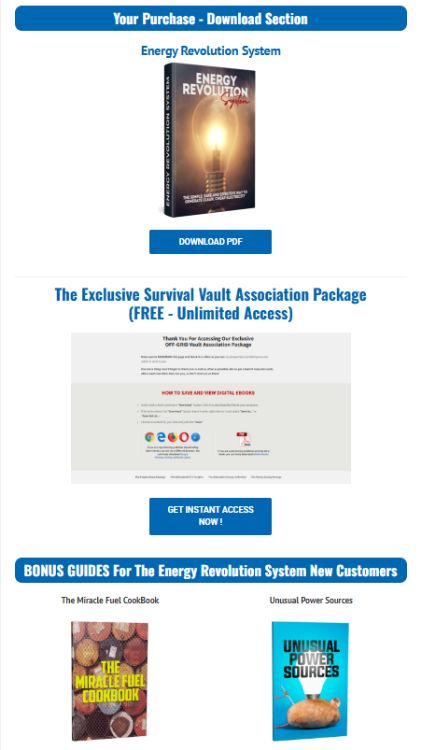
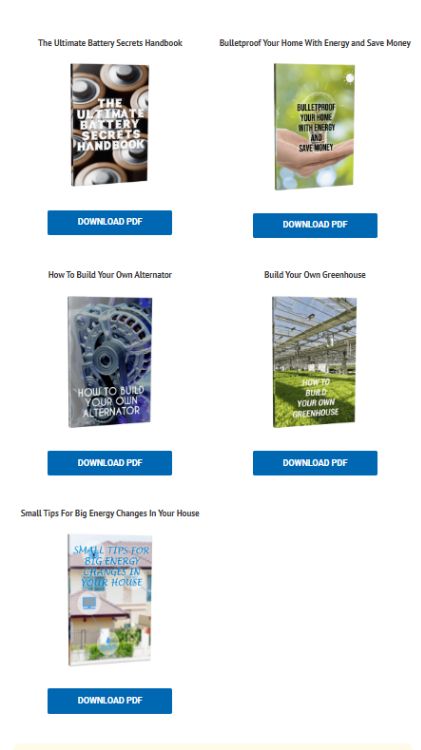

Other Bonuses
Bonus 1: “Lifetime Updates”
-
Claim: Get future revisions of the manual for free.
-
Audit: For a static DIY project, updates are of marginal value. It’s a standard digital product perk. Value: Low.
Bonus 2: “Priority Email Support”
-
Claim: Direct access to Michael for questions.
-
Audit: This is critical and high-risk. Asking an experimenter for troubleshooting advice on a lethal 8000V circuit is a recipe for disaster. For Chapter I questions, it could be helpful. Value: Mixed (Useful for Ch. I, Dangerous for Ch. III/IV).
Bonus 3: “The Energy Revolution Community”
-
Claim: Access to a private group of builders.
-
Audit: This could be the most valuable or most dangerous part. A community can offer troubleshooting. However, in free energy circles, groupthink can reinforce confirmation bias and dismiss critical safety concerns. Value: High-risk, High-potential-misinformation.
Total Value Calculation: The bonuses don’t add significant monetary value. The core value is the 109-page manual itself. If you view it as a detailed hobbyist project book for unusual electrical experiments, that’s its worth. If you view it as a utility-bill-slashing blueprint, the value proposition is based on a false premise.
Who Should NOT Buy This? (The Filter)
BE AGGRESSIVELY HONEST. DO NOT BUY THE ENERGY REVOLUTION SYSTEM IF:
-
You are looking for a “plug-and-play” solution to eliminate your power bill. This is hard, technical, dangerous DIY work with unproven results.
-
You have no experience with AC/DC electronics, soldering, or reading schematics. You will not understand the instructions, greatly increasing your risk of injury or failure.
-
You believe in “free energy” without a critical understanding of physics. This manual will feed your confirmation bias without providing scientifically valid proof.
-
You are on a tight budget. The manual cost is just the entry fee. The real component costs are significant.
-
You are not willing to risk severe injury or death. Chapters III and IV are not exaggerations. People die experimenting with MOTs and HV capacitor banks.
-
You plan to connect this to your home’s electrical grid. This is illegal in most areas and endangers utility workers.
ONLY CONSIDER THIS IF:
-
You are an experienced electronics hobbyist or a qualified electrician/engineer.
-
You understand high-voltage safety protocols intimately.
-
You approach this purely as an experimental physics project to observe phenomena like wireless power transfer and HV oscillations, not as a functional energy solution.
-
You have a dedicated, safe workshop and the budget for proper safety equipment and components.
Pricing, Refunds, & The “Loophole”
-
The Price: The front-end offer is typically ~$47.
-
The Guarantee: It likely offers a 30-60 day money-back guarantee. This is standard. The loophole is that you can download the entire PDF, study it, and if the reality of the projects doesn’t match the sales pitch, you can request a refund.
-
The Safety Net: The risk is financial, but the physical risk is on YOU. The guarantee gets your $47 back, but it won’t un-electrocute you or un-burn your house down. The real “safety net” is your own knowledge, caution, and adherence to the manual’s own stark warnings.
Upsells: Be aware there are almost certainly upsells: “Premium” video modules, toolkits, or consulting. They are not required to build the core system. The 109-page PDF is the complete build guide.
FAQ
-
Is the Energy Revolution System a scam?
-
It is not a scam in the sense of sending you nothing. You get a detailed, real manual. The “scam” may be in the interpretation of its results. It sells an over-unity dream that likely stems from measurement errors, not replicable energy creation.
-
-
Is it saturated?
-
The market for free energy info is crowded. The specific builds in this manual are unique in their detail, but the concepts (induction coupling, Kapagen-style devices) are known in fringe experimenter circles.
-
-
How much time per day do I need?
-
For Chapter I: A full weekend to source parts and build. For Chapters III/IV: Dozens to hundreds of hours of careful, slow, safety-focused work.
-
-
What’s the difference between this and a solar panel kit?
-
Solar is a proven, safe, commercially-available technology with predictable output. This is an unproven, dangerous, experimental DIY project with questionable output.
-
-
Are the “free energy” claims real?
-
Based on the laws of thermodynamics (energy conservation), no. The observed effects are likely due to misunderstanding reactive vs. real power and the behavior of meters and bulbs under high-frequency electricity.
-
-
Can I really power my whole house?
-
Absolutely not. Even if the output claims were real (they’re not), the systems described are low-power experiments, not whole-house generators.
-
-
Is it legal?
-
Building it for personal experiment is generally legal. Connecting any homemade generator to the grid without utility approval and certified equipment is illegal and dangerous.
-
-
What happens if I get caught connecting it to the grid?
-
Fines, disconnection of your service, and liability for any damage or injury caused to utility workers.
-
-
Do I need to be an electrician?
-
For Chapter I, advanced DIY skills. For Chapters III/IV, you need expertise beyond a standard electrician—you need high-voltage laboratory experience.
-
-
What is the single biggest risk?
-
Electrocution from the Microwave Oven Transformer or the charged capacitor bank. The voltage and current are sufficient to cause instantaneous death.
-
-
Will it work in an apartment?
-
Chapter I might be attempted, but it’s a fire risk. Chapters III/IV with ground rods are impossible.
-
-
Does it work in all weather?
-
The ground-based devices (III/IV) would be extremely dangerous in wet conditions. Moisture drastically increases the risk of arc-over and shorts.
-
-
Are the components easy to find?
-
Yes, that’s one strength. The manual lists Amazon/eBay sources for most items. The dangerous parts (MOTs, HV caps) are readily available, which is part of the problem.
-
-
What is the expected lifespan of the devices?
-
Unknown. They are one-off experiments, not engineered products. Components like spark gaps erode, capacitors degrade, and coils overheat.
-
-
Can I modify the system?
-
The manual encourages experimentation, which multiplies the inherent dangers.
-
-
Is there a community for help?
-
Possibly as a bonus. Be wary of taking safety advice from anonymous online experimenters.
-
-
What is the refund rate?
-
Unknown, but likely high once buyers realize the complexity and danger involved.
-
-
Are there success stories?
-
The only “success” shown is within the manual itself—the same bulbs and meters you see on the sales page. There is no independent, verified proof of a functioning, over-unity system powering a home.
-
-
Could this damage my appliances?
-
Yes. The “dirty” high-frequency power from these devices can easily fry sensitive electronics like computers, TVs, and inverter-chargers.
-
-
What’s the #1 thing the sales page doesn’t tell me?
-
That the “incredible results” are most likely systematic measurement errors, not usable energy creation, and that achieving even those results requires risking your life.
-
Final Verdict: Scam or Savior?
| PROS | CONS |
|---|---|
| Extremely Detailed Manual: 109 pages of step-by-step, photo-illustrated instructions. | Lethally Dangerous: Projects involve 2000-8000V with lethal current levels. |
| Specific Parts Lists: Links to exact components (e.g., Duxtop cooker). | Scientifically Dubious: Core “free energy” claims violate fundamental physics. |
| Interesting Experiments: For a qualified person, it’s a fascinating look into fringe energy concepts. | Not a Practical Solution: Will not reliably power a home. Output claims are likely false. |
| Pragmatic Chapter II: Contains useful basic schematics for standard renewable setups. | High Real Cost: Components and safety gear cost hundreds to thousands. |
| Money-Back Guarantee: Low financial risk to access and review the information. | Encourages Risky Behavior: Suggests grid-tying experimental, dirty power. |
| Creates False Hope: Sells a dream that, for 99.9% of buyers, will end in frustration or danger. |
The Final Call:
The Energy Revolution System is not a scam, but it is a dangerous and misleading product.
It is a well-documented, high-risk experimenter’s blueprint disguised as a home energy solution. The creator sells you the sizzle of “free energy” but delivers the steak of a hazardous electronics project manual.
If you are sitting on the fence, here is the reality:
You can spend $47, download this manual, and within hours understand the profound gap between its marketing and its reality. You can then, if you are a qualified expert, proceed with extreme caution as a purely academic exercise. Or, you can request a refund.
What you cannot do is safely and legally use this to power your home. The laws of physics, the authorities having jurisdiction over your electrical grid, and the very real specter of electrocution stand in your way.
This manual is a curiosity for the experienced and reckless. It is a trap for the hopeful and uninformed.
The choice is now fully informed. You know what is behind the paywall. The risk is no longer hidden; it is documented in this audit and screaming from the manual’s own safety warnings.