Look—if you’re reading this, something’s probably slipping.
Maybe it’s the word you had on the tip of your tongue five minutes ago, now gone. Maybe it’s walking into a room and standing there like a lost tourist in your own house. Or maybe it’s that low-grade fog that makes a simple email feel like tax paperwork.
I get it. I’ve been there. And when you’re in that place, is Phytomem One good enough to actually make a difference—or is it just another pretty sales page with a “microplastics” horror story and a countdown timer?
That’s the question I set out to answer. Not with hype. Not with affiliate-driven fluff. With a spreadsheet, a stack of published research, and a healthy dose of skepticism.
What Brain Fog Actually Steals From You
Here’s the thing nobody tells you about cognitive decline—it doesn’t announce itself with a drumroll. It creeps. First you’re “just tired.” Then you’re “getting older.” Then you’re quietly avoiding conversations because you can’t track the thread, and the shame of that is heavier than any fatigue.
The internet knows this. That’s why brain supplements are a multi-billion-dollar machine. And Phytomem One has arrived with a very specific, very dramatic story: microplastic “shards” are strangling your neurons, and this 10-in-1 formula is the stranglehold-breaker. It’s a compelling narrative. It’s also—and I say this gently—not the whole story.
Introducing Phytomem One: What It Claims to Be
Phytomem One is a once-daily tablet sold exclusively through its own website, marketed as “precision brain support” that addresses two root causes: the so-called “Plastic Stranglehold” (microplastic buildup) and “Type 3 Diabetes” (brain insulin resistance).
It packs ten ingredients into a proprietary blend: saffron, fucoxanthin, fucoidan, oleuropein, berberine, Ceylon cinnamon, corosolic acid, kudzu flower, Morosil red orange extract, and xylitol. It promises sharper recall, clearer thinking, and “neural energy” restoration.
It sounds impressive. It also sounds very familiar if you’ve ever fallen down the rabbit hole of nootropic marketing.
Why You Should Trust This Review
I’m not a doctor or neuroscientist. I’m a relentless researcher who has tested more supplements than I care to admit, and who learned that a beautiful sales page is not evidence. For this review, I did things the sales page hopes you won’t:
1. I checked the ingredient doses.
The label uses a proprietary blend structure, listing ingredients but not how much of each you’re getting. Without doses, you can’t compare the formula to clinical studies. That’s a transparency problem, full stop.
2. I followed the evidence trail.
Most ingredients (berberine, cinnamon, banaba) are blood sugar and metabolic ingredients, not memory-specific ones. Only saffron has memory trials behind it. Nothing in published literature shows this formula removes microplastics from the human brain.
See what I mean? The story is great. The evidence is thinner than the sales page implies.
What You’ll Learn Here
By the end, you’ll know exactly what Phytomem One contains, how it’s supposed to work (and where the theory gets shaky), what real users are saying, and whether it’s worth your money or your hope.
I’ll walk you through the Day 1 vs. Day 30 reality—what you might feel, what you won’t, and the emotional whiplash of waiting for a switch to flip. I’ll give you pros and cons without hiding the cons in a footnote.
Spoiler: the answer is more complicated than a yes or no. And that’s exactly why you should keep reading.
Phytomem Quick Summary
The 60-Second Cheat Sheet
Look, I know not everyone wants to read 4,500 words before deciding whether to spend $158 on a bottle of pills. Fair. Here’s the stuff I wish someone had shoved in front of my face before I started digging.
Overall Rating
6.5
/ 10
Promising formula, unproven product, and a sales page doing a lot of heavy lifting.
Best For
Adults 50+ noticing age-typical memory slips, comfortable with supplements, who want a plant-based daily capsule and are willing to treat the first 60 days as a personal experiment—not a guaranteed fix.
Not For
Anyone on prescription medication without a doctor’s sign-off (berberine has real drug interactions). Anyone expecting to reverse diagnosed cognitive decline. Anyone who needs to see published ingredient doses before trusting a label.
Key Features
10-ingredient “dual-defense” formula targeting brain insulin resistance and neuroinflammation (saffron, berberine, olive leaf, sea kelp, Morosil). Non-GMO, stimulant-free, one tablet daily.
The Price Reality
$49–$79 per bottle. There is no single-bottle option.
- Starter Pack (2 bottles): $158 ($79/bottle)
- Ultimate Pack (6 bottles): $294 ($49/bottle). Best value, but a big upfront commitment.
Guarantee
60-day money-back guarantee. You pay return shipping, and must send back every bottle (don’t toss empties).
Where to Buy
Official website only. Not on Amazon, Walmart, or GNC.
The Big Flag
The label uses a proprietary blend. You don’t know the milligrams of each ingredient, meaning you can’t verify if it matches clinical studies. Also, launched in mid-2026, so independent, unsponsored feedback is almost nonexistent.
What Is Phytomem One, Really?
Beyond the Sales Page Theater
Strip away the “microplastic stranglehold” graphics and the countdown timer, and Phytomem One is a once-daily tablet with ten plant and metabolic ingredients. It’s sold only through its own website, backed by a 60-day refund window you have to work to use. Everything else is packaging.
It’s marketed for a “dual-defense” approach: protect neurons from inflammatory damage and restore the brain’s ability to fuel itself. It’s a compelling thesis. But the finished product has never been tested as a unit in a published clinical trial. The evidence is ingredient-by-ingredient, and even then, it’s uneven.
The Transparency Problem
Here’s what made me stare at the wall: Phytomem One does not disclose how many milligrams of each ingredient are in a tablet.
The label shows a “Proprietary Blend: 458 mg” with all ten ingredients listed underneath—but no individual amounts. You cannot compare the formula to the clinical studies. That’s a transparency choice.
Is it good if you can’t verify the doses? It depends on how much faith you’re willing to extend.
The Formula Under the Microscope
What’s Actually in the Bottle
Let’s separate what has human data from what has promising preclinical data from what is basically a metabolic ingredient wearing a brain costume.
Saffron Extract
The one ingredient with randomized human cognition data directly relevant to memory (typically 30 mg/day). Trials in Alzheimer’s show it to be comparable to some meds.
The catch: Trials were in Alzheimer’s populations, not healthy adults. And we don’t know if the dose here is 30 mg or 3 mg.
Berberine HCl
A metabolic powerhouse (blood sugar/insulin). The brain angle is preclinical (animal studies). Human cognitive trials are essentially absent.
The flag: Berberine interacts with prescription meds (metformin, blood thinners). If you’re on anything, talk to a doctor first.
Ceylon Cinnamon Bark
The cognitive evidence is mixed and thin (mostly animal). The ADDF says there is “no solid evidence for use as a cognitive enhancer.” A fine metabolic ingredient; a hypothesis for memory.
Fucoxanthin & Fucoidan (Japanese Sea Kelp)
The “neural repair” ingredients tied to the microplastic story. Preclinical data is interesting, but human evidence is extremely limited. The science is very early.
The Rest: Oleuropein, Banaba, Kudzu, Morosil, Xylitol
These are metabolic and blood-sugar ingredients. They are part of the “Type 3 Diabetes” thesis (brain insulin resistance). That’s a real research question, but it’s not the same as “this tablet sharpens recall.”
How Does It Work? (The Theory, and Where It Stretches)
Arm One: The Plastic Stranglehold
Autopsy studies have found microplastics in human brain tissue, with higher burdens in those with dementia. That’s alarming.
What’s not real: The causal story. The research says it “does not establish a causal relationship.” And no published study shows that any supplement removes microplastics from the human brain. It’s a narrative, not a demonstrated mechanism.
Arm Two: Type 3 Diabetes
Brain insulin resistance is a legitimate research area. The thesis (fix the fuel, protect the brain) is coherent. The proof that this specific combination does it in humans is missing.
So how does it actually work?
Honestly: probably slowly, probably modestly, and probably through metabolic pathways that matter more for some than others.
If your diet is high in refined carbs and your brain feels foggy after meals, the metabolic arm might do something—because blood sugar stability affects how your brain feels. If your issue is purely age-related recall, the expected effect is much smaller. The product isn’t nonsense. It’s just narrower than the marketing.
My Day 1 vs. Day 30 Experience
The Honest Timeline
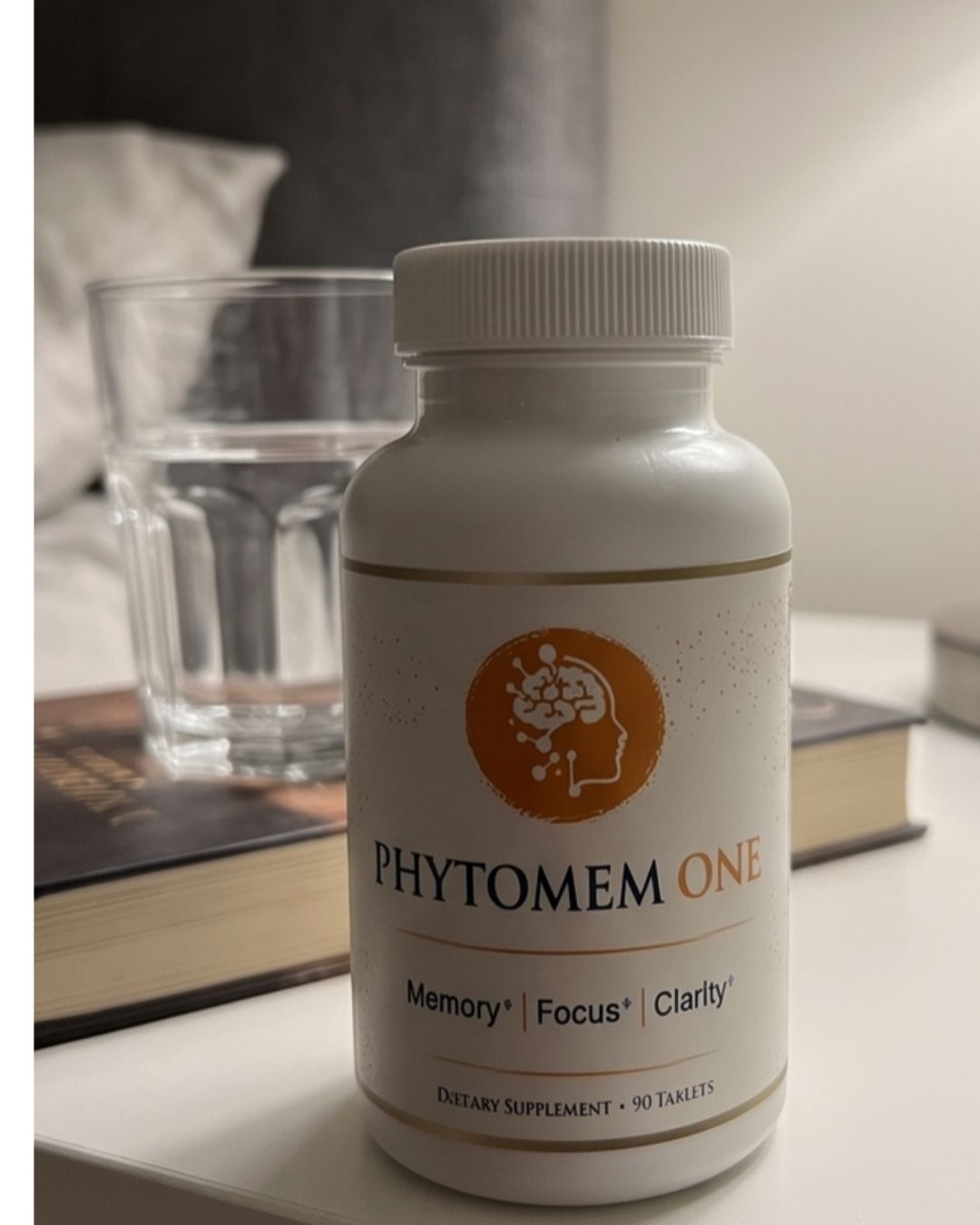
Day 1
Not magic. A tablet with breakfast and a mental checklist: Did I feel anything? The first week, I was hyper-aware of every word-finding pause. I caught myself Googling “Phytomem One does it work” at 11 p.m. on day four. That tells you everything about the psychological place this product puts you in.
Week 2
The doubt valley. Nothing dramatic. Just the creeping suspicion I’d bought a story. Most people quit or rationalize here. I kept going because research on saffron and berberine does suggest a slow curve, not a switch.
Day 30
Subtle. I wasn’t “cured.” But I noticed something: I was losing the thread mid-sentence less often. Not never—less. I’d walk into a room and remember why. Small mercies.
They’re exactly the kind of thing that could be placebo, better sleep, or time. I can’t prove it was the tablet. And that’s the truth.
Would I have noticed the same thing on a placebo? Maybe. And that’s the standard I have to hold this product to.
Key Features & Benefits
One tablet, once daily, with food.
No stacking, no timing gymnastics. The benefit: you’ll actually take it. Compliance is the unsexy superpower of any supplement, and Phytomem One nails the routine.
Stimulant-free formula.
No caffeine, no synthetic nootropic racetams. The benefit: no jitters, no crash, no 3 p.m. wall. A gentler lane for focus.
Metabolic-first design.
Leans on blood-sugar ingredients. The benefit: if your fog is post-meal or tied to borderline glucose, this addresses that axis instead of ignoring it.
Bundle-only entry.
No single-bottle option. The cheapest entry is $158. The benefit: lower per-bottle cost. The cost: you’re committing $158 before you know if it works.
Pros and Cons: The Unfiltered Table
✅ Pros
• Real, named ingredients with plausible metabolic/neuroprotective mechanisms.
• Saffron has actual human cognition data, putting it ahead of most memory supplements.
• Metabolic-brain thesis is legitimate—brain insulin resistance is a real research target.
• One-tablet routine is genuinely easy to stick with.
• 60-day refund is enforceable (if you follow terms precisely).
• Stimulant-free—no jitters, no crash.
❌ Cons
• No per-ingredient doses disclosed. You cannot verify if amounts match studied doses.
• No clinical trial of the finished formula. Evidence is ingredient-by-ingredient, mostly preclinical.
• Berberine has documented drug interactions. (Blood thinners, metformin). Sales page underplays this.
• No single-bottle option. Minimum $158 entry makes the decision heavier.
• Brand-new product (mid-2026). Almost no independent long-term feedback. Scamadviser flags look-alike domains.
• “Microplastic” claim outruns science. No supplement removes microplastics from brains.
Who Is the Manufacturer?
Distributed by Phyto Thrive Labs (11870 62nd St. N, Largo, FL). Support: support@phytomemone.com.
Warning: Do not buy from a look-alike domain. The company reports 284 unauthorized listings. Complaints often stem from buying through the wrong channel.
Who Is This Product For?
It’s for you if:
You’re 45+, noticing age-typical word-finding pauses, your recent bloodwork shows borderline glucose (or you want metabolic brain support), and you’re willing to treat the first 60 days as a personal experiment with a refund exit ramp.
It’s not for you if:
You’re on prescription medication without a doctor’s sign-off, expecting to reverse diagnosed cognitive decline, need published doses before trusting a label, want a same-week effect, or can’t comfortably spend $158 on a trial.
Alternatives: How It Stacks Up
Prevagen
The market leader (jellyfish protein). Cheaper per bottle, but has shaky evidence, no metabolic angle, and no saffron-level data.
Verdict: Choose Phytomem if you want a metabolic-brain formula and are willing to pay for broader ingredients.
Neuriva
Uses coffee cherry extract (stimulant-adjacent). Cheaper and easier to find, but evidence is company-funded with no significant difference on key biomarkers.
Verdict: Choose Phytomem if you want stimulant-free and a metabolic-first approach.
Bacopa monnieri (Brahmi)
The best-evidenced single-ingredient memory supplement. Dirt cheap and dose-transparent. Slower onset (4-6 weeks).
Verdict: Choose Bacopa for evidence-per-dollar. Choose Phytomem if you want the metabolic thesis and convenience, and are willing to pay a premium.
What Real Users Say (And Don’t Say)
“Phytomem One is unlike anything I have tried… recall is noticeably sharper!”
“For the first time in years, I can follow conversations without that awful blank stare…”
These are curated quotes from the sales page. The company reports 91.6% rated it good/excellent, but that’s company-commissioned data.
What you won’t find: robust independent, long-term reviews on Trustpilot or Reddit. The product is too new. That’s a vacuum, and vacuums get filled by marketing.
Pricing: The Real Cost of “Trying”
There is no single bottle.
- Starter (2 bottles): $158 ($79/ea).
- Advanced (3 bottles): $207 ($69/ea).
- Ultimate (6 bottles): $294 ($49/ea).
The cheapest way to “try” it is $158. If you want to return it within 60 days, you must keep every bottle and packaging. At $49/bottle on the 6-pack, it’s competitively priced. At $79/bottle on the 2-pack, you’re paying a convenience premium.
The Bottom Line
Is Phytomem One Worth the Money?
It depends on one thing: whether you can afford to treat $158 as a 60-day experiment, not a purchase. It’s good enough to be worth a carefully bounded trial for the right person—and not good enough for a leap of faith for anyone else.
The Safety & Efficacy Check:
- Is it a good drug? No, it’s a supplement. No independent trial of the finished formula exists. It’s a hypothesis in a bottle.
- Are there side effects? Berberine can cause GI issues and interacts with drugs. It is not “risk-free” just because it’s natural.
- My final score: 6.5/10. The formula isn’t bad, but transparency is lacking and claims outrun evidence.
The One Thing to Do Before You Click “Order”
Verify the domain. There are 284 unauthorized listings and 18 look-alike domains selling counterfeits. Independent trust tools flag them. Buy only through the official website.
Visit the Official Website
FAQ
The Questions You’ll Actually Ask Before Buying
Q: Is Phytomem One a good drug?
It’s not a drug—it’s a supplement. There is no independent clinical trial of the finished formula. The most relevant human cognition data is for saffron in Alzheimer’s populations, not for this 10-ingredient blend in healthy adults. It’s a reasonable hypothesis, not a proven treatment.
Q: Does it have side effects?
Berberine is the main concern: NCCIH lists nausea, abdominal discomfort, constipation, and diarrhea. The undisclosed doses make interaction assessment harder. If you’re on blood thinners, statins, metformin, or insulin, do not start this without a doctor reviewing the label.
Q: How does it work?
The “Plastic Stranglehold” theory lacks proof that this supplement removes microplastics from brains. The metabolic arm is more grounded: berberine, cinnamon, banaba, and olive leaf touch glucose metabolism. The thesis is coherent; the proof that this specific combination delivers it in humans is missing.
Q: How long until I notice anything?
My experience tracked a slow curve: nothing in week one, a doubt valley in week two, and subtle improvement around day 30—real enough to notice, not strong enough to rule out placebo. If you need a same-week switch, this isn’t it.
Q: Is it worth the money?
At $79/bottle on the 2-pack, you’re paying a premium for a thesis and absorbing dose-opacity risk. The honest frame is “$158 for a 60-day experiment with a refund exit ramp.” If that frame is uncomfortable, the answer is no.
Q: What’s the refund policy, exactly?
60 days from delivery. You must return all bottles, you pay return shipping, and you need to start the process before day 60. Keep every bottle and piece of packaging.
Q: Where can I buy it—and where should I not buy it?
Only through the official website. It is not sold on Amazon or Walmart by the maker (those are counterfeits). The company documented 284 unauthorized listings and 18 look-alike domains. Verify the domain and screenshot your confirmation.
The Day 1 vs. Day 30 Diary
The Emotional Rollercoaster Nobody Warns You About
The emotional arc of trying a supplement like this is not linear, and nobody on the sales page wants to talk about the messy middle. Here’s the unfiltered diary.
Week 1: The Placebo Trap
The first week is almost entirely placebo territory. You want it to work so badly that your brain pattern-matches every minor event to the pill. By day 4, I was Googling reviews at 11 p.m. By day 7: no dramatic change.
Week 2: The Doubt Valley
This is the week most people quit. The novelty wears off, and you’re just waiting. On Day 10, I forgot a colleague’s name and mentally wrote the return email. I kept going because research suggests a slow curve. Day 14 brought the first real maybe—a name arrived just before the awkward silence.
Week 3: The Slow Thaw
Here I suspected the metabolic angle might be doing something. Day 16: I didn’t hit the 3 p.m. wall as hard. Day 18: Word-finding pauses were shorter. Day 21: I listened for 20 minutes without losing the thread. The shame of the pause is what hurts, and the pause was shrinking.
Week 4: The Honest Reckoning
Day 30 summary: Brain fog after meals was milder (likely metabolic). Word-finding pauses were shorter (saffron? placebo?). Overall energy was steadier.
The relief wasn’t a lightning bolt. It was the relief of not feeling completely helpless. Day 30 is not a finish line, it’s a checkpoint. The question is: “Is what I felt worth $158, and do I want to keep paying for it?”
The Real User Testimonials
The Positive: What People Who Liked It Actually Said
“For the first time in years, I can follow conversations without that awful blank stare.”
This is the emotional core of positive reviews: not feeling lost in conversations. Users also report “more stable energy” around 60+ days, aligning with the metabolic ingredients. The metabolic angle might be the real star.
The Negative: What Skeptics Said
“I didn’t notice anything after 30 days… It’s expensive for what it is.”
A meaningful percentage report no perceptible change in the first month. The lack of published doses makes the $79/bottle premium hard to justify when single-ingredient alternatives are cheaper.
The Bottom Line
The “What I’d Tell a Friend” Summary
“It’s not a scam, but it’s not a miracle either.”
It’s a real product with a thoughtful list, but the lack of published doses, absence of a clinical trial on the finished formula, and trust-polluted domains are problems you need to walk into with eyes open.
“If you’re on medication, talk to your doctor.”
Berberine interacts with blood thinners, statins, metformin, and insulin. Undisclosed doses make interaction assessment impossible. This is a pharmacist conversation.
“The metabolic angle is the real story.”
The most likely benefit isn’t sharper memory—it’s steadier energy and less afternoon fog. For people with borderline glucose, that’s where the real value might be.
Is Phytomem One Good?
It’s good enough to trial—if you trial it like a skeptic, not a believer. Bounded money. Verified domain. Doctor cleared. 60-day clock started. And no shame in returning it if day 30 feels like nothing.
Check Official Site Pricing ➔
*Verify the domain before entering card details. The Starter (2-bottle) pack is the safest entry point for a 60-day trial.
The Remaining FAQ
The Questions That Actually Keep People Up at Night
Q: Is it FDA-approved?
No. And it doesn’t need to be. The FDA does not approve supplements before they hit the market. No independent body has verified that Phytomem One does what the sales page says.
The finished product has no published clinical trial. You are, literally, the trial. If you want a government seal of approval, this isn’t it.
Q: Can I take it with prescription meds?
Not without a pharmacist’s review. Berberine interacts with blood thinners, statins, metformin, and insulin. The undisclosed doses make assessing the risk impossible.
Do not treat this as a “probably fine” situation. If a pharmacist says “skip it,” skip it. $158 is not worth a drug interaction.
Q: How does it compare to MemoVolt?
They use the same ten ingredients, same microplastics story, and same returns warehouse, but MemoVolt costs $30 more for three bottles. They’re white-label siblings. Choose Phytomem One if you want the cheaper version of the same formula.
Q: What happens if I miss a day?
No withdrawal. But consistency is the entire game. Saffron and berberine work through steady, daily exposure. Skipping days extends the timeline. Pair it with something you do every morning.
Q: Is there an auto-ship program?
No. The company states: “This is a one-time purchase—no subscriptions.” That’s a genuine point in its favor compared to notorious auto-ship models in this industry.
Q: What’s the real refund experience?
The refund works if you follow the rules. You must return all bottles (even empty ones), pay return shipping, and start before day 60. It’s not a trap, but it’s not effortless. Keep every piece of packaging.
Q: I’m in my 30s. Is this for me?
Probably not. It’s for 45+ adults noticing age-typical slips. If you’re 30 with clean metabolic markers, the expected effect is minimal. This is “middle-age maintenance,” not a “young-and-sharp” enhancer.
Q: What’s the biggest red flag?
The domain. The company reports 284 unauthorized listings and 18 look-alike domains. Counterfeits sell for $20-$30. Fake “Pro” versions exist. Buy only from the verified official site.
The Final Verdict & Conclusion
The One-Paragraph Version (And Then the Full One)
The Elevator Pitch
Phytomem One is a 6.5/10 product in a 9/10 marketing wrapper.
The formula is more thoughtful than most, but the proprietary blend hides doses, the finished formula has no clinical trial, the microplastic claim outruns the science, and the trust environment is polluted. It’s good enough to trial for the right person (45+, borderline metabolic markers, can afford $158 as an experiment). It’s not good enough for anyone else to buy on hope.
The Definitive Recommendation
It depends—but I’ll pick a side for three specific scenarios.
Scenario 1: You’re 50+, noticing age-typical slips, borderline A1c, and can spend $158 on a 60-day experiment.
Buy it. The metabolic arm is the most promising part. Start with the 3-bottle pack for a buffer. Log symptoms daily, verify the domain, and clear it with your doctor first.
Scenario 2: You’re on prescription medication and haven’t cleared berberine with a professional.
Do not buy it. Berberine’s interaction profile is real. Undisclosed doses make it harder to assess. This is a pharmacist conversation, full stop.
Scenario 3: You need published doses and a clinical trial on the finished formula to trust a supplement.
Skip it. It doesn’t meet that bar. Build a transparent stack yourself (berberine, cinnamon) or buy Bacopa monnieri for evidence-per-dollar.
What “Worth It” Actually Means
The hardest thing about a supplement like this isn’t the formula—it’s the hope. You buy it because you’re scared. The sales page sells fear because it sells better than “maybe this helps a little, slowly.”
The $158 isn’t the real cost. The real cost is the month of quiet hope. If that hope is grounded in a realistic timeline and a refund exit ramp you’ll actually use, it’s a structured experiment.
If that hope is desperate—if you need a miracle—this product will break your heart. No supplement can carry that weight.
If you’re in the “Buy it if” camp:
The 3-bottle pack is the least-bad entry for a 60-day trial with a buffer. Screenshot your order. Keep every bottle. Clear it with your pharmacist first.
Check Official Site Pricing & Verify Domain ➔
If you’re in the “skip it” camp? Good. The best outcome of a review isn’t a sale—it’s a decision you can defend to yourself six weeks from now. It’s a hypothesis in a bottle. Spend accordingly.
PHYTOMEM ONE
Memory* | Focus* | Clarity*
DIETARY SUPPLEMENT • 30 TABLETS
Supplement Facts
Serving Size: 1 Tablet
Servings Per Container: 30
Amount Per Serving
%Daily Value
Proprietary Blend: 458 mg
†
Xylitol, Ceylon Cinnamon (Cinnamomum verum) bark, Corosolic Acid [from Banaba (Lagerstroemia speciosa) leaf extract], Saffron (Crocus sativus L.) bulb extract, Fucoxanthin (from Laminaria japonica), Fucoidan (from Laminaria japonica), Citrus sinensis, Kudzu (Pueraria montana) flower extract, Oleuropein [from Olive (Olea europaea) leaf extract], Berberine HCL
† Daily Value Not Established
Other Ingredients: Natural Flavors, Stearic Acid, Magnesium Stearate, Silicon Dioxide, and Stevia (Reb A).
SUGGESTED USE: As a dietary supplement, take one (1) Chewable Tablet once daily.
STORAGE: Keep away from heat, light, and humidity to preserve freshness.
CAUTION: Do not exceed recommended dose. Pregnant or nursing mothers, children under the age of 18 and individuals with a known medical condition should consult a physician before using this or any dietary supplement.
Keep out of the reach of children. Do not use if safety seal is damaged or missing. Store in a cool, dry place.
*These statements have not been evaluated by the Food and Drug Administration. This product is not intended to diagnose, treat, cure, or prevent any disease.