
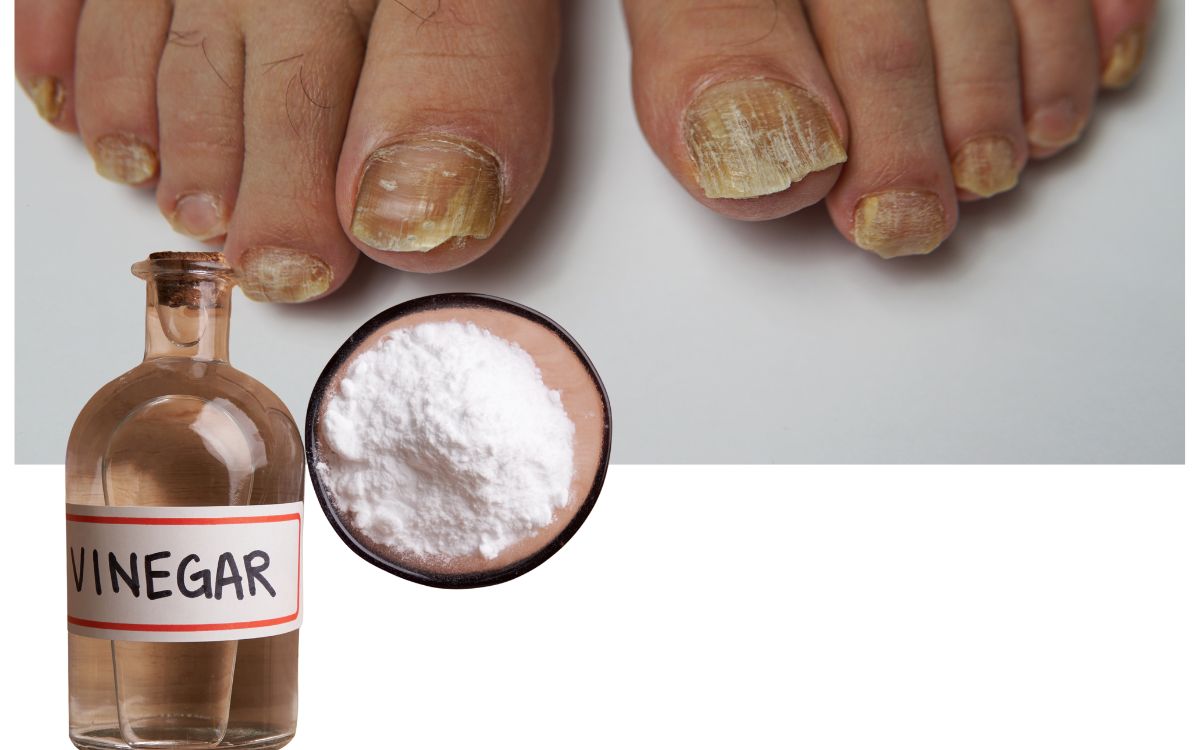
Home Remedy Deep Dive
Vinegar vs. Nail Fungus:
The Honest Truth.
Let’s be honest. That weird, discolored, maybe-a-little-thickened nail on your toe or finger is more than just a cosmetic issue. It’s a nagging little secret.
You think about it when you slip on sandals, at the pool, or during a pedicure. And if you’ve started searching for solutions, you’ve almost certainly stumbled upon the world of nail fungus home remedies vinegar.
It’s the number one folk remedy, the thing your grandma might have sworn by.
But does it actually work?
Or is it just an old wives’ tale with a pungent smell?
I’m not here to give you a sterile, medical-textbook answer. We’re going to dive deep, get our hands (and maybe our feet) dirty, and explore the real story. This isn’t a magic bullet guide. It’s a conversation with a friend who’s done the research.
Here is exactly what we are going to unpack:
🔬
The Science: The actual chemical mechanics of why vinegar affects fungus.
🍎
The Types: White vinegar vs. Apple Cider Vinegar (ACV)—which one wins?
🛁
The “How-To”: The exact soaking methods and routines people actually use.
⚖️
The Cold, Hard Truth: What you can realistically expect, and when to call it quits.
So, kick off your shoes, get comfortable, and let’s get to the bottom of this.
Know Your Foe
The Itch You Can’t Scratch:
Understanding the Enemy 🦠
Before we start pouring condiments on our feet, it helps to know what we’re fighting. Nail fungus, or onychomycosis if you want to get fancy, isn’t just a surface-level stain. It’s a living, breathing (well, feeding) colony of microscopic organisms that have decided your keratin—the tough protein that makes up your nails—is an all-you-can-eat buffet.
These fungi love warm, dark, and moist environments. Sound familiar?
Yeah, your shoes are basically a five-star fungal resort.
Once they get under the nail bed, they set up shop. And they are tenacious. They build a protective biofilm that makes them incredibly hard to evict.
This is why so many commercial treatments feel like they take forever. And it’s also why the idea of a simple nail fungus treatment with vinegar is so incredibly appealing. It’s cheap, it’s sitting in your pantry, and it promises a natural fight back. But to understand if it can work, we need to talk about what vinegar is.
Why Vinegar?
The Science (and the Folklore) Behind the Soak
Vinegar, in all its forms, is essentially diluted acetic acid. That “sour” part is the key. The core idea behind using vinegar for nail fungus is all about pH.
Fungi thrive in a neutral pH environment. It’s where they’re happiest and most productive. Acetic acid is, well, acidic. It creates an environment that is deeply inhospitable to fungal growth. It’s like showing up to a party where the music is awful, the lights are blinding, and there’s no food. The fungi don’t necessarily die immediately, but they absolutely hate it. It stresses them out, inhibits their growth, and can eventually kill them.
The Orchid Analogy
Think of it like this: you’re trying to grow a beautiful, delicate orchid (the fungus) but you’re constantly pouring a little bit of lemon juice on it (the vinegar). The orchid isn’t going to do well, is it?
Now, let’s be clear. The scientific studies on vinegar as a standalone nail fungus treatment with vinegar are limited. You won’t find a hundred clinical trials. But the principle is sound. Acetic acid has known antimicrobial and antifungal properties. Doctors sometimes use it in clinical settings for ear infections! So, while it might not be a peer-reviewed, FDA-approved drug, the logic isn’t just coming from thin air. It’s a classic case of “it makes sense, and anecdotally, it has worked for a lot of people.”
The Big Question: Will vinegar kill foot fungus for good?
The honest answer is: it can, for some people, in some cases. But it’s not a guarantee.
Choosing Your Weapon
A Quick Vinegar Tour:
Which One Do You Grab?
Not all vinegars are created equal. Walk down the supermarket aisle, and you’re faced with a choice. Let’s break down the usual suspects for a vinegar solution for nail fungus.
Apple Cider Vinegar (ACV)
“The Folk Hero”
🍎
👉 Moderate Acidity: (around 5% acetic acid). Often has “the mother” – a cloudy blob of beneficial enzymes & bacteria.
The Vibe & Best For:
The most popular choice for a nail fungus home remedies vinegar soak. People love the “natural” aspect of the mother. It’s the holistic darling. Has a milder, slightly sweet smell compared to white vinegar.
White Distilled Vinegar
“The Workhorse”
🧪
👉 Higher Acidity: (typically 5-10% acetic acid). No-nonsense, pure acid.
The Vibe & Best For:
The strongest and most direct option. If your main goal is to ask “does vinegar kill toenail fungus?” with the most potent pantry weapon, this is it. The smell is sharp and very… vinegary.
Other Players (Wine, Rice)
🍷
👉 Variable, usually lower acidity.
Honestly? Not really worth it for this purpose. They’re for dressing salads, not fighting fungal armies. Stick with ACV or White.
So, what’s the best vinegar for toenail fungus? There’s no definitive winner. Apple Cider Vinegar has a cult-like following, and many swear by the “mother.” White vinegar is a purer, stronger acid hit.
My advice? Start with what you have. If one doesn’t seem to be doing the trick after a few weeks, try the other. This is a marathon, not a sprint.
Taking Action
Your Battle Plan:
How to Actually Use Vinegar for Nail Fungus
Alright, theory is over. This is the practical part. This is where we roll up our sleeves and get to work. There are a few ways to wage this war, and you might need to experiment to see what works for you.
Method 1
The Classic Soak (The Foot Jacuzzi of Doom)
This is the most common and, for many, the most effective method.
What you’ll need:
- ✔ A basin or tub big enough for your feet (or hands).
- ✔ Warm water.
- ✔ Your vinegar of choice (ACV or White).
- ✔ A towel you don’t mind getting a little stained.
The Recipe & Ritual:
The Ratio: The classic ratio is one part vinegar to two parts warm water. So, if you use one cup of vinegar, use two cups of water. The warm water helps open up the pores and allows the vinegar to penetrate better.
Mix it up: Pour the vinegar and warm water into your basin. Swirl it around. Give it a sniff. Yep, that’s the smell of battle.
Soak it off: Submerge your affected foot (or hand) for 15 to 30 minutes. This is a great time to read a book, watch a show, or just close your eyes and breathe. Try not to think about pickles.
Dry, don’t just air dry (CRUCIAL):
When you’re done, pat your foot and the affected nail extremely dry with a clean towel. Get in between the toes. Be thorough. Remember, moisture is the enemy’s best friend.
The Aftermath: Some people rinse with clean water after, but many don’t. It’s up to you. If you’re worried about the smell lingering or your skin getting irritated, a quick rinse is fine.
Frequency: Do this once or twice a day. Consistency is your absolute best friend here. Skipping days is like giving the fungus a weekend vacation.
Method 2
The Direct Application (For the Brave and Focused)
If a full soak feels like too much, or you want to target the nail more directly, this is your method.
What you’ll need: Vinegar (either kind) and Cotton balls or pads.
The Recipe & Ritual:
This one is straightforward, but potent.
- 💧
No dilution needed? You can use straight vinegar, but be warned—it can sting, especially if you have any tiny cuts or broken skin around the nail. If you have sensitive skin, a 1:1 mix with water is a safer bet.
- 🎯
Dab and soak: Soak a cotton ball in the vinegar solution. Press it directly onto the affected nail. You can even try to gently work the cotton under the tip of the nail if possible.
- ⏱️
Hold it there: You want it to stay in contact for at least 15-20 minutes. Sometimes, you can use a bandage to hold it in place, but that can trap moisture, so be careful. I prefer to just sit and hold it while watching TV.
- 💨
Dry thoroughly: Again, pat it completely dry afterwards.
Method 3
The Preventative Maintenance & Booster Shot
Once you’ve got the infection under control, or if you’re just prone to fungus, vinegar can be a fantastic preventative tool.
👟 The Sneaker Spray:
Mix a little vinegar with water in a spray bottle (maybe 1:3 ratio) and give the inside of your shoes a light spritz after you take them off. Let them air dry completely. It kills the odor-causing bacteria and makes the environment less fungal-friendly.
🧦 The Sock Soak:
When washing your socks, add a cup of white vinegar to the rinse cycle. It’s a great, incredibly cheap natural disinfectant.
Managing Expectations
The Reality Check:
What the Vinegar Reviews Don’t Always Tell You
Let’s get real for a moment. The internet is full of glowing success stories. “I cured my nail fungus in two weeks with ACV!” And hey, that might be true for some. But for every success, there’s someone who tried it for months with no result. Why?
This is the part where I have to manage your expectations. Will vinegar kill toe fungus that’s been living there for years, has thickened the nail immensely, and has spread to the nail root (the matrix)? Probably not on its own.
Vinegar works best on new, mild infections. If the fungus has deeply embedded itself, the vinegar simply may not be able to penetrate deeply enough to kill the entire colony. It’s like weeding a garden. If you just snap the tops off, they grow back. You have to get the root.
Furthermore, can vinegar kill toenail fungus that isn’t actually a fungus? Sometimes, what looks like a fungal infection is actually a different condition, like psoriasis or a yeast infection. Vinegar won’t do anything for those.
So, when you’re reading those vinegar for nail fungus reviews, take them with a grain of salt (but not in your soak, that would sting!). Look for the ones that talk about patience, consistency, and mild cases.
The Unsexy Truth About Time & Consistency
This is the biggest hurdle. If you’re looking for a one-week miracle, you will be disappointed. Nails grow painfully slow. A toenail can take 12 to 18 months to grow out completely.
Even if you successfully kill every last fungal cell today, you will still see the discolored, damaged part of the nail until it grows out and is replaced by new, healthy nail from the base.
Your sign that it’s working isn’t the old nail turning pink again. It’s the new nail growth at the cuticle looking clear and healthy.
You have to wait for that healthy new nail to slowly push the old, damaged nail out. This is a process of months, not days.
The Multipliers
Supercharging Your Soak: The Dynamic Duos
Vinegar is a great solo artist, but sometimes it needs a band. You can combine it with other natural remedies to create a more powerful vinegar solution for nail fungus.
🧂
Vinegar & Baking Soda
Baking soda is alkaline and can help dry out the fungus. You can do a baking soda paste scrub before your vinegar soak to help exfoliate the nail surface, allowing the vinegar to penetrate better.
🌿
Vinegar & Tea Tree Oil
Now we’re talking. Tea tree oil is a powerful essential oil with robust antifungal properties. Adding a few drops of tea tree oil to your vinegar soak or direct application can create a powerful one-two punch.
* Just do a patch test first to ensure you’re not sensitive to it!
🫧
Vinegar & Hydrogen Peroxide
Hydrogen peroxide is a potent oxidizing agent that kills microbes. Some people alternate soaks or add a bit to the mix.
* Again, be cautious, as it can be drying to the skin.
👨⚕️ When to Wave the White Flag
This is extremely important. As much as I believe in home remedies, there is a time and a place for professional help. If you check any of these boxes, it’s time to put the vinegar down and pick up the phone.
- ⚠
No improvement after 2-3 months of consistent, diligent effort.
- ⚠
The infection is spreading to other nails or the surrounding skin.
- ⚠
You’re in pain or there’s swelling, redness, or pus. This could indicate a secondary bacterial infection.
- ⚠
You have diabetes or a weakened immune system. Do not mess around. Foot health is critically important, and infections can become serious very quickly.
- ⚠
The nail is severely thickened, crumbling, or separating from the nail bed dramatically.
A doctor can prescribe topical antifungal lacquers, oral medications, or even laser treatments. These are powerful tools for stubborn, deep-seated infections that a pantry remedy just can’t touch.
The Conclusion
The Final Word: Is It Worth The Smell?
So, after all this, where do we land on the great nail fungus home remedies vinegar debate?
It’s not a cure-all. It’s not magic. But it is a legitimate, low-cost, low-risk option. For a mild, early-stage fungal infection, a consistent vinegar regimen can absolutely turn the tide. It creates an environment where the fungus can’t thrive, and with relentless patience, you can grow it out.
The real secret sauce isn’t the vinegar itself—it’s the routine. The daily commitment to creating an environment that tells the fungus, “You are not welcome here.” It’s the soaks, the meticulous drying, the clean socks, the aired-out shoes. The vinegar is the catalyst, but your consistency is the engine.
It might not work for everyone, but for many, it’s the perfect first line of defense. It’s a way to take back control, to fight back with something simple and natural. So yes, your kitchen holds a potential weapon in the fight against nail fungus. It might be a bit smelly, and it definitely requires patience, but the possibility of seeing that fresh, healthy pink nail slowly emerge is worth every single second.
Ultimately, the journey to tackling this issue often begins with exploring options like vinegar, and for the right person with the right mindset, it can be the start of a very successful story.