
The lights flicker, then die. The hum of the refrigerator falls silent. In the sudden, unnerving quiet, your mind starts racing: How long this time? Is the food spoiling? When will the Wi-Fi be back? It’s in this moment of darkness that the great portable vs. whole-house generators debate moves from a theoretical online search to a very pressing, real-world decision.
I get it. I’ve been there, sitting on the floor with a flashlight, scrolling through forums until my phone battery died. The information out there is a mess—full of technical jargon and sales pitches that make your head spin. So, let’s cut through the noise. This isn’t a spec sheet. This is a conversation about peace of mind, about what your life and home actually need when the grid decides to take a nap.
We’re going to walk through this together, no engineering degree required.
The Heart of the Matter: Two Entirely Different Philosophies 🧘
Imagine backup power as a spectrum.
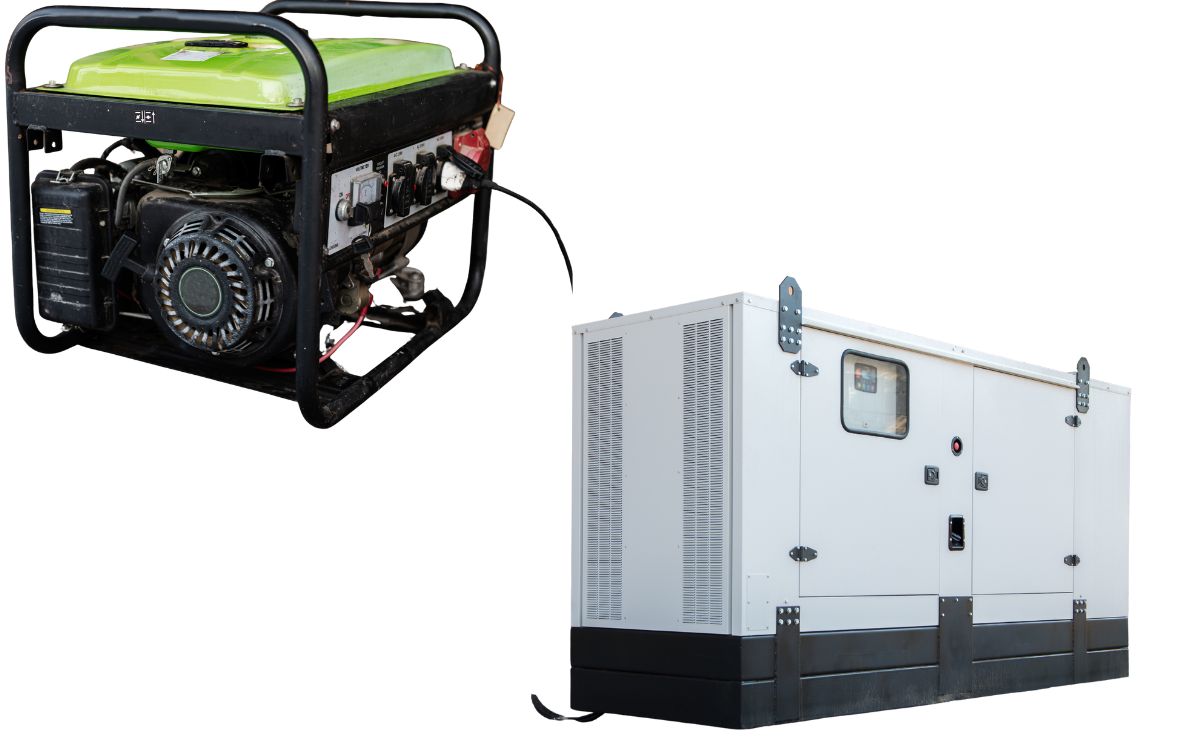
On one end, you have the portable generator. It’s the scrappy, versatile friend you call when you need a hand. You can move it, use it for a camping trip, or power a few essentials during an outage. It’s reactive. The power goes out, you haul it out of the garage, fire it up, and run some extension cords.
On the other end, you have the whole house generator (often called a standby generator). This is the silent guardian. It’s a permanent part of your home, like your furnace or water heater. It’s proactive. It sits there, day and night, watching. The millisecond the power fails, an automatic transfer switch tells it to wake up. Within seconds, your lights are back on, your fridge is humming, and your life barely skipped a beat.
See the difference? One is a tool you use. The other is a system that works for you.
Let’s break down these two contenders, warts and all.
The Portable Generator: Freedom, Fuel, and a Little Bit of Fuss 🔌
I love a good portable generator. There’s something satisfying about its utilitarian vibe. It’s power you can literally get your hands on.
The Shiny Upsides ✨
-
The Price Tag is (Usually) Friendlier: Let’s not dance around this. The upfront cost of a portable generator is significantly lower than a whole-house system. You’re looking at a few hundred to a couple thousand dollars, versus several thousand to over ten grand for a permanent setup. For many, this is the deciding factor, and it’s a perfectly valid one.
-
Take Your Power and Go: The name says it all. It’s portable! Need to run some power tools on a remote job site? Heading to a tailgate? Want to power a small RV? This single unit does it all. It’s not married to your house.
-
Simplicity of Installation: You typically don’t need an electrician to just run some extension cords from a portable unit. For a more integrated setup, you can have an electrician install a manual transfer switch, which is a dedicated panel that lets you power key circuits in your house without running a spiderweb of cords through the window. Still, it’s a far cry from the complex installation of a standby unit.
The Gritty Downsides 😬
-
The Manual Labor Marathon: The power goes out. It’s raining. Maybe it’s 2 a.m. Now you have to: 1) Remember where you stored it. 2) Haul its heavy self out of the garage/shed. 3) Make sure it’s positioned at least 20 feet from your house (carbon monoxide is a silent killer, people!). 4) Check the oil and fuel. 5) Start it up (which can be a pull-cord workout on a cold day). 6) Run those extension cords or switch over the manual transfer panel. It’s a process.
-
Limited Power Means Tough Choices: You can’t power everything. This is where the “power budget” comes in. You might have to choose between the microwave and the coffee maker. Your central air conditioner? Forget it. That beast requires a massive surge of power. So, you’re prioritizing—fridge, some lights, maybe the Wi-Fi router and your phone. This is a key point in the portable vs permanent generator decision. Are you okay with managing a limited resource?
-
The Fuel Fandango: Portable generators are thirsty, and they have small tanks. A typical 5,000-watt generator might gulp down a gallon of gas every 8-10 hours. During a multi-day outage, you become a full-time fuel manager. That means storing large, unsafe amounts of gasoline (which goes bad), or braving long lines at the few gas stations that have power. It’s a hassle and a potential hazard.
-
Safety, Safety, Safety: I can’t stress this enough. Are whole house generators safe? They’re installed to code, away from living areas. Portable generators require your vigilance. Improper use leads to carbon monoxide poisoning and house fires every year. You must keep it far from windows and doors, and you should never, ever back-feed your house by plugging it into a wall outlet. Just don’t.
The Whole-House (Standby) Generator: The Set-and-Forget Fortress 🏰
If the portable generator is a dependable friend, the whole-house generator is your live-in butler for electricity. It’s a different league of convenience and power.
The Glorious Benefits 🤩
-
The “It Just Works” Magic: This is the big one. The power fails. You hear a faint click from your electrical panel. A few seconds later, a smooth, insulated hum starts outside. Your lights flicker back to life. Your clocks are still blinking, but that’s about the only sign anything happened. The heat or AC kicks on. The TV stays on. Your sump pump keeps working, saving your basement from flooding. It’s seamless. It’s automatic. It’s glorious.
-
Power for the Whole Shebang: We’re not picking and choosing circuits here. A properly sized standby vs portable generator can handle your entire house. Central air conditioning, the well pump, the electric stove, the water heater—it all just works. You live normally while your neighbors are huddled around candles. This is a massive quality-of-life upgrade during an outage.
-
Fuel for the Long Haul: Most permanent home generators connect directly to your home’s natural gas line or a large propane tank. No more fuel cans. No more late-night runs to the gas station. They have a virtually endless supply of fuel, ready to run for days or even weeks without you lifting a finger.
-
It Boosts Your Home’s Value: Let’s talk brass tacks. A permanently installed whole house generator vs standby (they’re the same thing) is seen as a significant home improvement. It’s a tangible asset that makes your property more attractive and resilient, a fact that isn’t lost on potential buyers.
The Not-So-Glamorous Reality 💸
-
The Sticker Shock is Real: The initial investment is substantial. The unit itself is expensive, and the professional installation—which involves pouring a concrete pad, plumbing the fuel line, and installing the automatic transfer switch—adds thousands more. When people ask, “are generators worth the money?” this is the hurdle. You’re paying for supreme convenience and total coverage.
-
It’s a Permanent Fixture: This isn’t something you can take with you. It’s bolted to a slab in your yard. While it adds value, it’s not a portable asset. You’re investing in this home.
-
It Needs a Little TLC: Like any sophisticated machine, it benefits from occasional professional maintenance. Most units are designed to self-test weekly, running for a few minutes to ensure everything is in working order. But an annual check-up by a pro is a good idea to keep it in peak condition for years to come.
Side-by-Side: The Ultimate Showdown Table ⚔️
Let’s lay it all out on the table. Literally.
| Feature | The Portable Generator (The Sprinter) | The Whole-House Generator (The Marathoner) |
|---|---|---|
| Cost | $500 – $2,500+ 🤑 | $7,000 – $15,000+ 💰 |
| Installation | DIY-able (with cords) or simple electrician job for a transfer switch. | Requires a professional (electrician & plumber). Complex. |
| Power Output | Limited. Powers essentials (fridge, lights, phone charger). | Whole-home. Powers everything, including central AC. 🥶 |
| Operation | Manual. You do the work when the power fails. | Fully Automatic. It detects the outage and kicks in. 🤖 |
| Fuel | Gasoline or Propane. Requires storage & refilling. 🛢️ | Natural Gas or large Propane tank. Hands-off. |
| Portability | Yes! Take it to the job site, camping, etc. 🚐 | No. It’s a permanent part of your home. |
| Safety | Requires your vigilance. Carbon monoxide and cord management are real risks. | Professionally installed to code. Generally very safe. ✅ |
| Best For | Occasional, short outages. Budget-conscious homeowners. DIYers. Renters. | Frequent/long outages. Homes with sump pumps, wells, or medical needs. Maximum convenience. |
So, Are Generators Worth the Money? Let’s Get Personal.
This is the million-dollar question, or at least the several-thousand-dollar one. The answer isn’t a simple yes or no. It’s a “it depends on YOUR life.”
Ask yourself these questions:
-
What’s Your Outage History Like? Do you lose power once a year for an hour, or does a stiff breeze plunge your neighborhood into darkness for days? If it’s the former, a portable might be all you need. If it’s the latter, your sanity might be worth the investment in a standby unit.
-
What’s Your “Can’t-Live-Without” List? Is it just the fridge and a few lights? Or do you have a medical device like a CPAP machine? A home office that can’t go dark? A basement that floods without a sump pump? The more critical your power needs, the more a whole house generator vs standby makes sense.
-
What’s Your Budget, Really? Be honest with yourself. It’s not just the generator cost. For a portable, factor in the price of a heavy-duty extension cord or a transfer switch installation, plus a fuel stabilizer and safe fuel storage. For a whole-house, get a few quotes that include the full installation.
-
How’s Your DIY Spirit? Are you the type who doesn’t mind a little adventure during a storm? Or does the thought of going outside in a thunderstorm to wrestle with a noisy machine fill you with dread?
When you frame it around your actual life, the choice often becomes clearer.
A Quick Word on the Big Brands (Looking at You, Generac) 🏭
You can’t talk about this topic without Generac generators pros and cons coming up. They’re the Kleenex of the standby generator world—incredibly dominant. The pros? Wide availability, a massive network of dealers, and brand recognition. The cons? Some folks argue you’re paying a premium for the name and that there are other quality brands (like Kohler) worth considering.
As for Generac power plans worth it? Their monitored maintenance plans can be a good “set it and forget it” option for those who want zero hassle, but like any extended warranty, you’re paying for peace of mind. It’s often a personal calculation on value.
The Final Verdict: It’s About Your Peace of Mind
We’ve run the numbers, weighed the pros and cons, and talked about fuel until we’re blue in the face. But when you strip it all away, the choice between portable vs. whole-house generators comes down to a feeling.
A portable generator is a reaction. It’s a capable, affordable solution that says, “I can handle this.” It gives you a fighting chance against the darkness.
A whole-house generator is an investment. An investment in normalcy. In comfort. In knowing that no matter what happens outside, your home remains a sanctuary. It’s the ultimate form of preparedness.
For me, after one too many nights fumbling with extension cords and worrying about the sump pump, the path was clear. But your journey might be different.
So, the next time the lights flicker, you won’t just see the darkness. You’ll see the solution. Whether it’s the versatile, budget-friendly power of a portable unit or the seamless, automatic protection of a whole-house system, you’ll know exactly which path leads you back to the light. And that, my friend, is the real power.