

What is the best alternative energy source for homes? If you’re asking that, you’re not just looking for a list. You’re probably standing in your kitchen, looking at your electricity bill, and feeling that little pinch of frustration. Or maybe you’re gazing out at your sun-drenched roof or wind-whipped yard, wondering if all that free energy could be put to work.
It’s a deeply personal question, and the frustrating, beautiful truth is this: there’s no single right answer for everyone. The “best” one is the one that fits your home, your budget, and your little corner of the world. So, let’s ditch the textbook answers and have a real conversation about your realistic green energy for homes.
It’s Not Just About Saving the Planet (But That’s a Great Bonus) 🌍
Let’s be honest. When we talk about renewable energy for residential homes, our minds go to polar bears and melting ice caps. And that’s a powerful, noble reason. But for most of us, the decision comes down to the kitchen table. It’s about independence. It’s about predictability.
Think about it. The utility company can raise its rates whenever it wants. You’re along for the ride. But the sun? The wind? They don’t send a bill. Tapping into renewable energy sources at home is like growing your own vegetables.
There’s an upfront cost and some sweat equity, but then you’re biting into a tomato that you nurtured, that you control. It’s a feeling of security, of self-reliance, that’s hard to put a price on. Of course, you can put a price on a lower electricity bill, and that’s a fantastic place to start.
The Shining Star: Rooftop Solar Panels ☀️
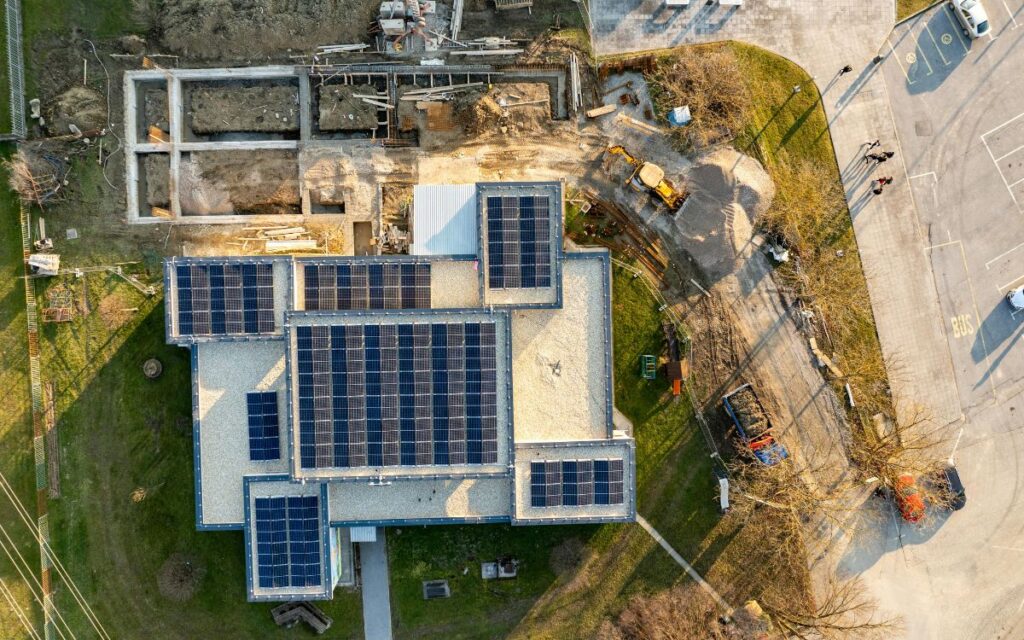
This is the one everyone pictures. Those sleek, blue-black arrays on a neighbor’s roof, silently turning sunlight into cash savings. Solar has become the poster child for renewable energy technologies for homes, and for good reason.
How it Feels: It feels like quiet, daily magic. There’s no noise, no moving parts you can see, just a subtle hum from the inverter if you listen closely. The real joy comes from watching your meter spin backwards on a bright Saturday afternoon. It’s a small, tangible “win” against the system. You’re literally making power out of thin air.
The Nuts and Bolts (Without the Boring Jargon):
Basically, photovoltaic cells (the fancy name for solar cells) get hit by photons from sunlight. This knocks electrons loose, and that movement of electrons is… you guessed it, electricity. It’s direct current (DC), which then gets converted by an inverter into the alternating current (AC) that your fridge and TV crave. Any extra power you make but don’t use flows back to the grid, often earning you credits from your utility company in a process called net metering.
The Sunny Side:
-
It’s Abundant: If you have a roof that gets decent sun, you’re in business.
-
Massive Savings: Drastically cuts or even eliminates your electricity bill.
-
Low Maintenance: Once installed, they just sit there and work. A occasional hosing off if you live in a dusty area is usually all they ask for.
-
Boosts Home Value: Studies consistently show homes with solar sell for more.
The Cloudy Days:
-
The Upfront Sting: The initial investment is significant. We’re talking tens of thousands of dollars. (But hold on, we’ll talk about incentives!)
-
Weather Dependent: No sun, no power. This is why most people don’t go completely “off-grid” with solar alone.
-
It’s About Your Roof: A old, shaded, or north-facing roof might not be a good candidate.
-
The Battery Question: To have power at night, you need batteries, and that’s another hefty cost layer.
The Unsung Hero: Geothermal Heat Pumps 🌋
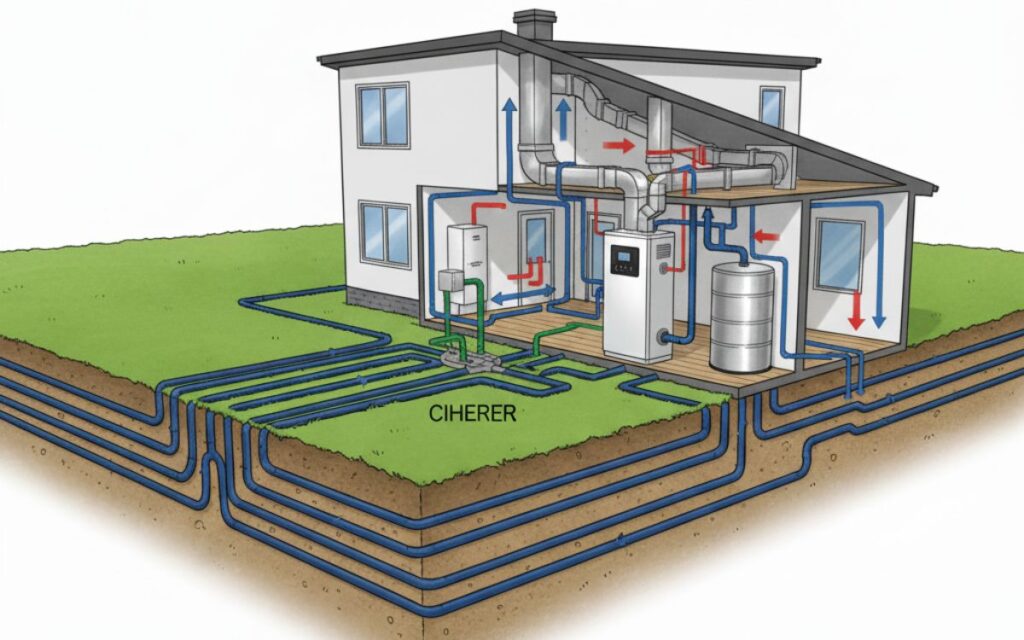
If solar is the flashy celebrity, geothermal is the reclusive genius. It doesn’t make a showy display on your roof. In fact, you’ll hardly see it at all. But when it comes to pure, relentless efficiency for heating and cooling, it’s almost unbeatable. This is one of the most powerful yet underrated sustainable energy solutions for homes.
How it Feels: The best way to describe it is “perfectly consistent.” On the hottest, muggiest day of summer, it doesn’t blast cold, dry air. It delivers a steady, cool comfort. In the dead of winter, the heat it produces doesn’t feel dry and parching like a furnace. It’s a gentle, even warmth. It’s not about powerful blasts; it’s about unwavering, quiet perfection.
The Nuts and Bolts:
Think of the earth, about 10 feet down, as having a constant, year-round temperature of around 50-60°F (10-16°C). A geothermal system uses a loop of pipes buried in your yard (or drilled deep down) filled with a water mixture. In winter, the fluid absorbs the earth’s heat and brings it inside. In summer, it pulls the heat from your house and dumps it into the cooler ground. It’s not creating heat from nothing like a furnace; it’s just moving it around. And moving heat is far, far more efficient than generating it.
The Underground Advantages:
-
Insane Efficiency: It can be 300-600% efficient, meaning for every unit of electricity it uses, it moves 3-6 units of heat. A top-tier furnace might be 95% efficient.
-
All-in-One: Heats your home, cools your home, and can even provide a big chunk of your hot water.
-
Quiet and Long-Lived: The indoor unit is whisper-quiet, and the ground loops can last for 50+ years.
-
Reliable: The earth’s temperature doesn’t change, so it works brilliantly regardless of the weather above ground.
The Down-to-Earth Drawbacks:
-
Extreme Upfront Cost: This is often the most expensive system to install, thanks to all that digging or drilling.
-
Major Yard Intrusion: Installing the ground loops is a significant landscaping project. Not ideal if you have a prized rose garden or a tiny urban lot.
-
Not a Full Electricity Replacement: It drastically reduces your heating/cooling bill, but you’ll still need a source for your lights and appliances.
The Gentle Giant: Residential Wind Turbines 🌬️
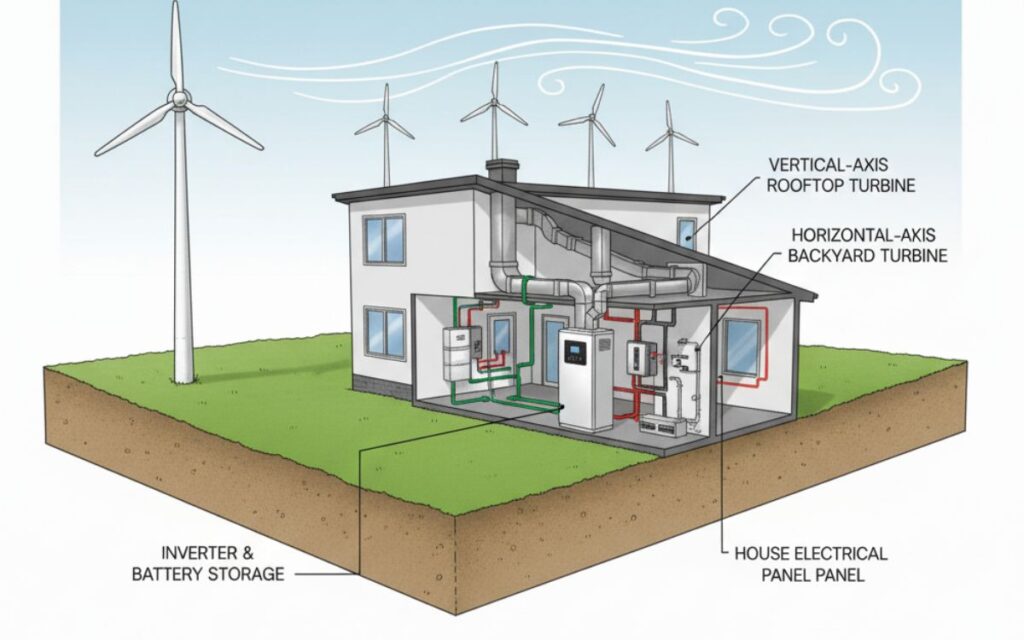
This one captures the imagination. Having your own personal windmill has a certain romantic, pioneering appeal. For the right homeowner in the right location, it can be a powerhouse.
How it Feels: It feels… powerful. There’s a tangible sense of harnessing a raw, natural force. You can hear the whoosh-whoosh-whoosh of the blades (though modern ones are much quieter). Watching the blades spin on a windy day gives you a visceral connection to the energy you’re creating. It’s dynamic where solar is static.
The Nuts and Bolts:
It’s the opposite of solar, in a way. Instead of photons, it uses the kinetic energy of moving air. The wind turns the blades, which spin a rotor, which spins a generator to produce electricity. It’s simple in principle, but the execution needs to be robust to handle the elements.
The Power of the Breeze:
-
Works Day and Night: Unlike solar, it can generate power 24/7, as long as the wind blows.
-
Incredibly Efficient in the Right Spot: If you have consistent, strong wind, a small turbine can generate a substantial amount of power.
-
Can Pair Beautifully with Solar: They often complement each other—sunny days aren’t always windy, and vice versa.
The Headwinds:
-
The Location, Location, Location Problem: This is the big one. You need a decent amount of land (usually an acre or more) and consistent, strong wind. A few breezy days aren’t enough. Urban and suburban settings with lots of trees and buildings are usually terrible for wind.
-
Visual and Noise Impact: Your neighbors might not share your enthusiasm for a 50-foot tower in your backyard.
-
Upfront Cost and Maintenance: The tower and turbine are a serious mechanical system that requires professional installation and can need maintenance over time.
-
Zoning and Permits: Many municipalities have strict rules about the height of structures, making it a regulatory hurdle.
Let’s Get Practical: A Side-by-Side Glance
Alright, that was a lot of words. Let’s boil it down. This table isn’t about declaring a winner; it’s about seeing how these renewable energy options for homes stack up in the real world.
| Feature | Solar Panels ☀️ | Geothermal 🌱 | Wind Turbine 🌬️ |
|---|---|---|---|
| Best For | Homes with sunny, unshaded roofs. | Homeowners planning to stay put long-term, with usable land. | Rural homes with at least 1 acre and strong, consistent wind. |
| Upfront Cost | High 😅 | Very High 😰 | High 😅 |
| Operating Cost | Very Low 🤑 | Very Low 🤑 | Low 🙂 |
| Lifespan | 25-30 years | 50+ years (ground loop), 25 years (heat pump) | 20-25 years |
| Maintenance | Very Low | Low | Moderate |
| Impact on Bills | Can eliminate electric bill. | Can slash heating/cooling bills by 50-80%. | Can significantly reduce or eliminate electric bill. |
| Visual Impact | On your roof, visible. | Mostly hidden. | Very prominent. |
Beyond the Big Three: Other Renewable Energy at Home Examples
The conversation doesn’t end with solar, geothermal, and wind. There are other fascinating renewable resources examples at home that are more niche, but perfect for specific situations.
-
Micro-Hydro Power: If you have a flowing stream or creek on your property, this is the holy grail. It’s the most consistent and reliable of all renewables, producing power 24/7. The setup is involved and requires permits, but the payoff is a constant, predictable stream of electricity.
-
Solar Water Heating: Different from solar panels that make electricity, these systems use the sun’s heat to directly warm your home’s water. It’s a simpler technology and can be a great first step into renewables, cutting your water heating bill—often your home’s second-largest energy guzzler—by half or more.
So, How on Earth Do You Choose? The “It Depends” Section 🤔
Let’s get back to that original, burning question: What is the best alternative energy source for homes? Here’s a decision-making flow that feels more human than a corporate flowchart.
First, look up. Is your roof mostly sunny from 9 am to 3 pm, or is it covered in shade from giant oak trees? If it’s sunny, solar is screaming your name. It’s the most accessible and widely adopted technology for a reason.
Second, listen. Where do you live? Are you in the windy Great Plains? A turbine might be a real contender. In the sun-scorched Southwest? Solar is a no-brainer. In the Northeast with high heating bills and plenty of land? Geothermal could be your long-term money saver. Your local climate is your most important partner in this.
Third, be honest about your budget. This is the least fun but most critical step. What can you realistically afford to invest? Remember, this isn’t just an expense; it’s an investment that pays back over time.
Fourth, think about time. How long do you plan to live in this house? Many of these systems have a payback period of 7-15 years. If you think you might move in 5 years, you need to consider how it affects your home’s resale value.
The Game Changer: Incentives and Financing 💰
Here’s the part that makes all this truly realistic. The sticker shock is real, but it’s not the whole story.
The Federal Investment Tax Credit (ITC) is a massive deal. Right now, it allows you to deduct 30% of the cost of installing a solar, geothermal, or wind system from your federal taxes. That’s not a deduction from your income, it’s a direct dollar-for-dollar credit against your tax bill. On a $30,000 solar installation, that’s a $9,000 savings. Poof.
And that’s just the start. Many states, cities, and even utilities offer their own rebates, tax credits, and sweetheart loans. Some utilities also offer fantastic net metering programs, making your meter a two-way street and giving you full credit for the power you produce.
Your homework? Before you do anything else, search for “[Your State] solar incentives” or “geothermal rebates.” The results might make your jaw drop.
The Final, Human Truth
We started this journey with a simple question: What is the best alternative energy source for homes? I hope by now you see that the answer isn’t in a textbook or a marketing brochure. It’s in the specifics of your life.
It’s in the angle of your roof.
It’s in the soil of your backyard.
It’s in the wind that rustles your trees.
And it’s in your wallet and your heart.
The best renewable energy for residential homes is the one that makes you feel a little more empowered, a little more secure, and a little more connected to the world right outside your window. It’s the one that turns your home from a passive consumer into an active, quiet producer.
So, take a walk around your property. Feel the sun on your face. Notice the wind. Think about what you want your home to be. The answer is already there, waiting for you to plug in.